01
THE HARDWARE
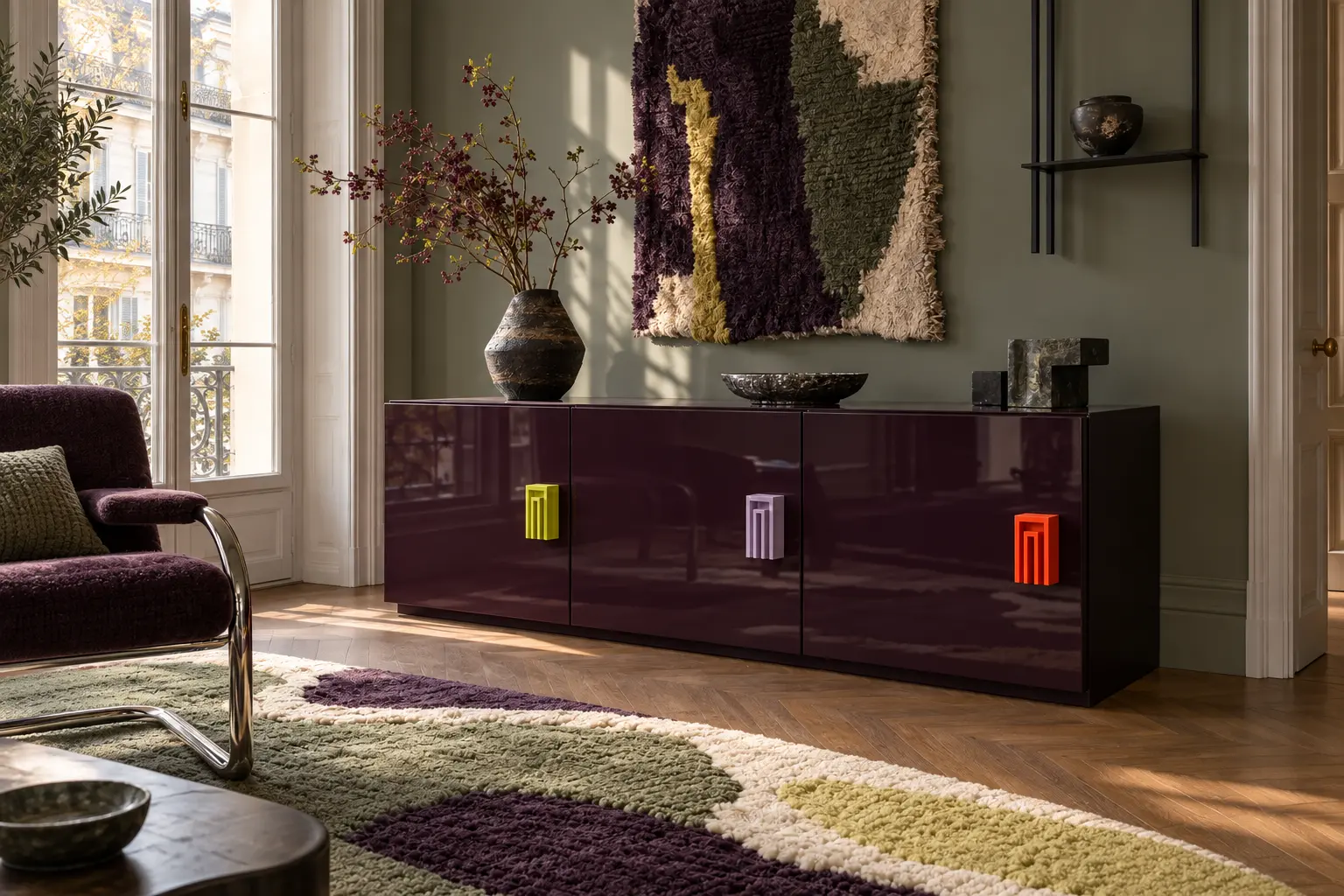
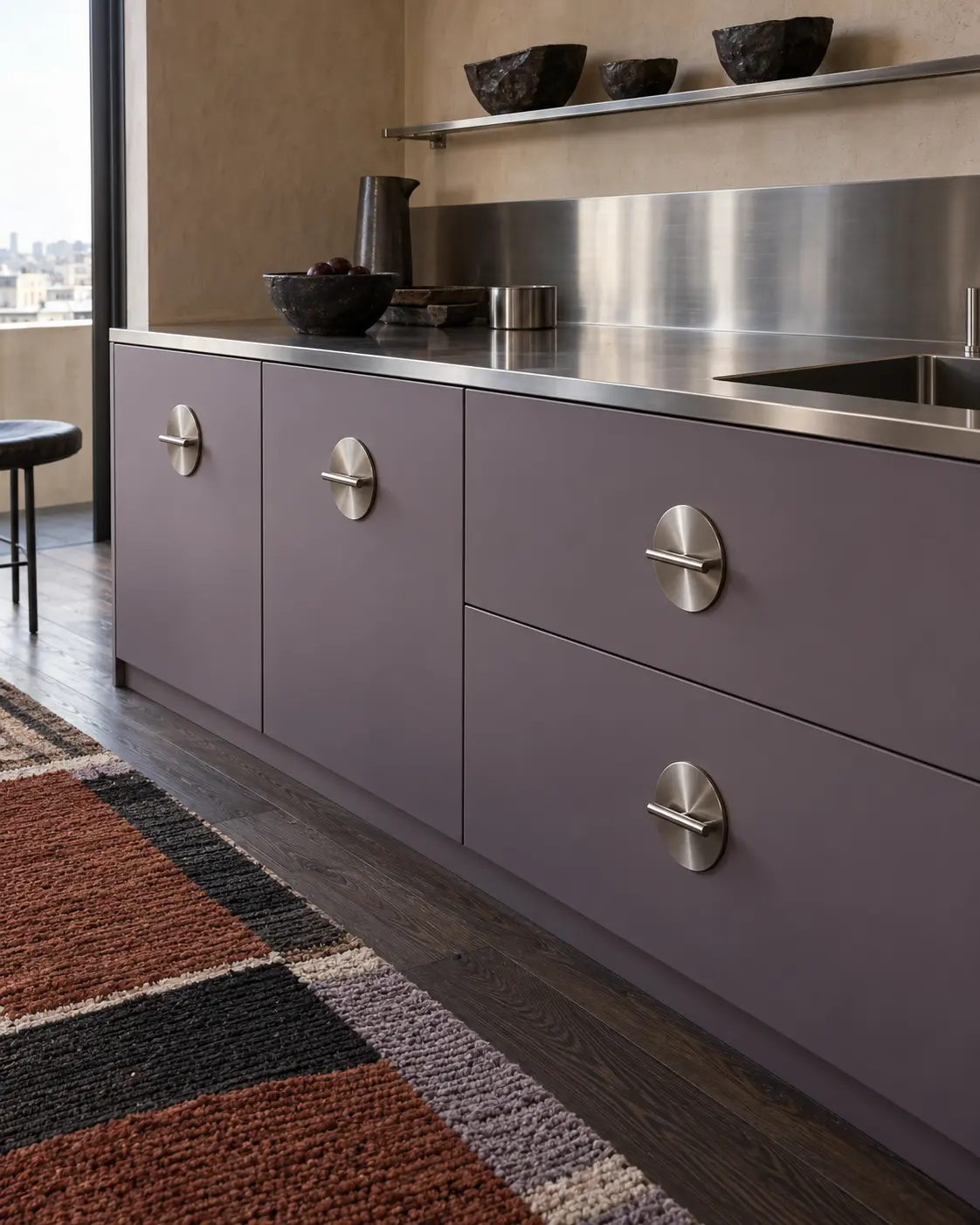
Three oversized architectural handles. Sharp, graphic and deliberately colourful. Almost absurdly simple — and probably the quickest way here to make a familiar cabinet feel completely different.
INTERIORS
How to make the furniture everyone has feel like something only you do.
IKEA is easy to recognise. Sometimes a little too easy.
But replacing a perfectly good piece because you’ve seen it in a hundred other homes feels increasingly unnecessary. The more interesting option is to keep it — and change the part that makes it feel generic.
A handle. A surface. A set of legs. Sometimes, nothing at all.
This isn’t about making IKEA look expensive. It’s about making it less expected.
01
The smallest change might make the biggest difference.
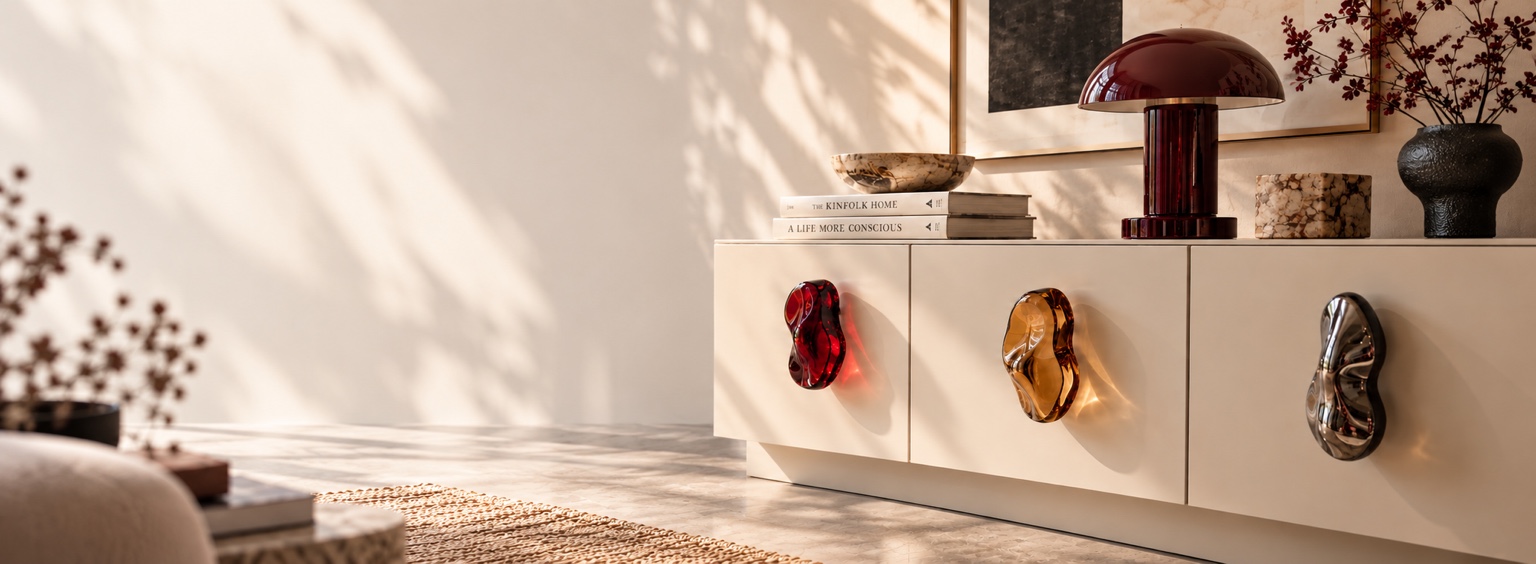
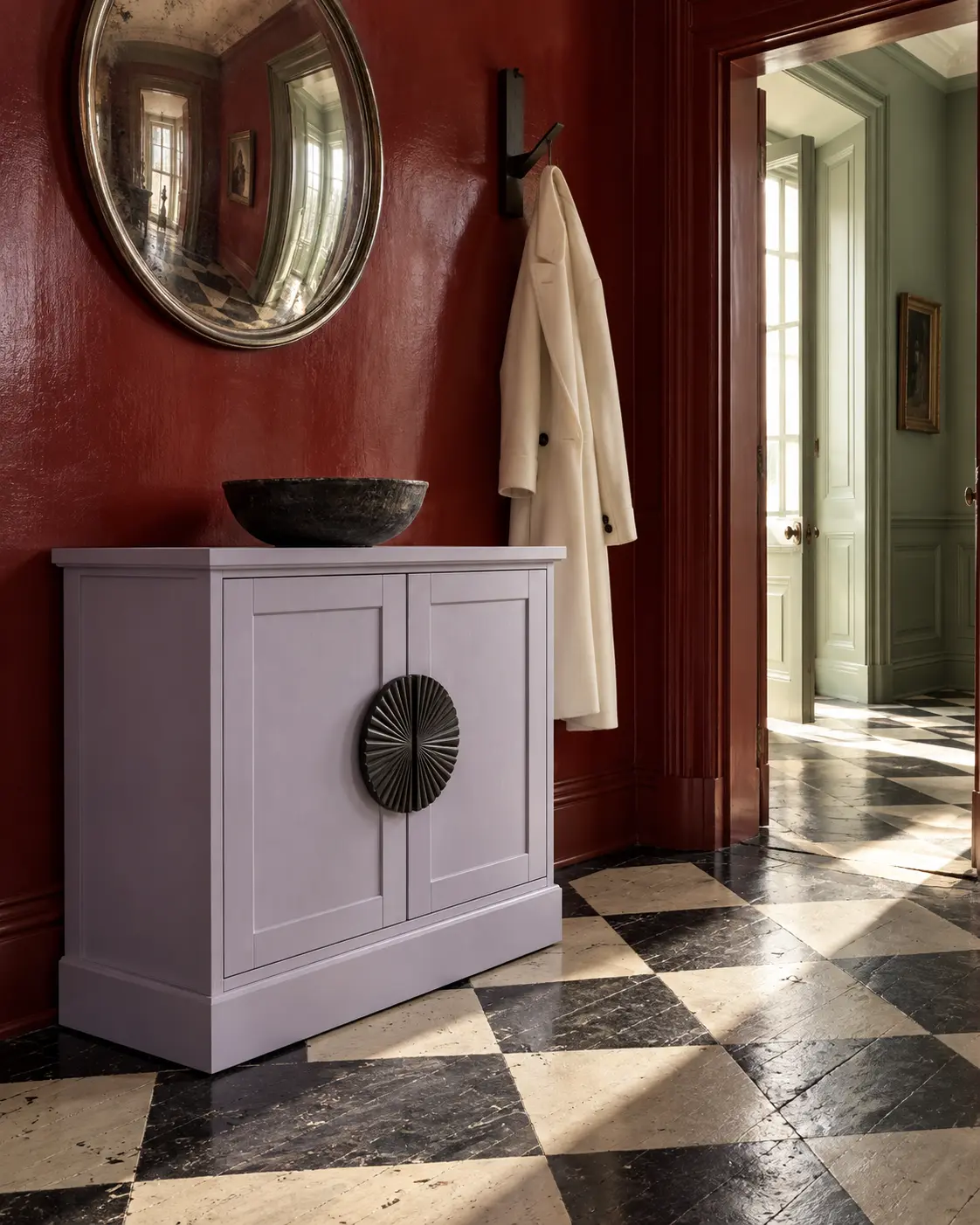
Standard hardware is designed to disappear. Replace it with something that refuses to.
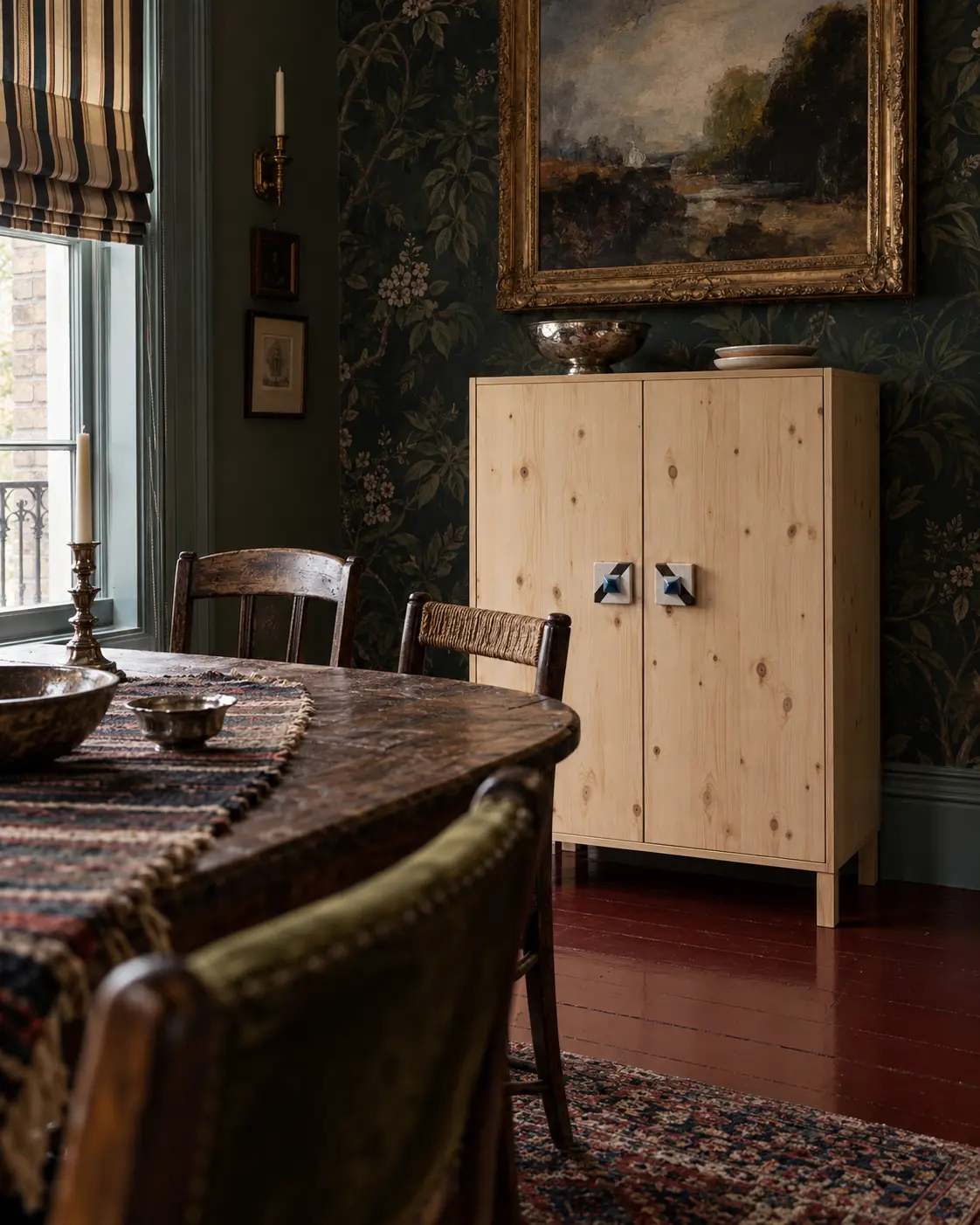
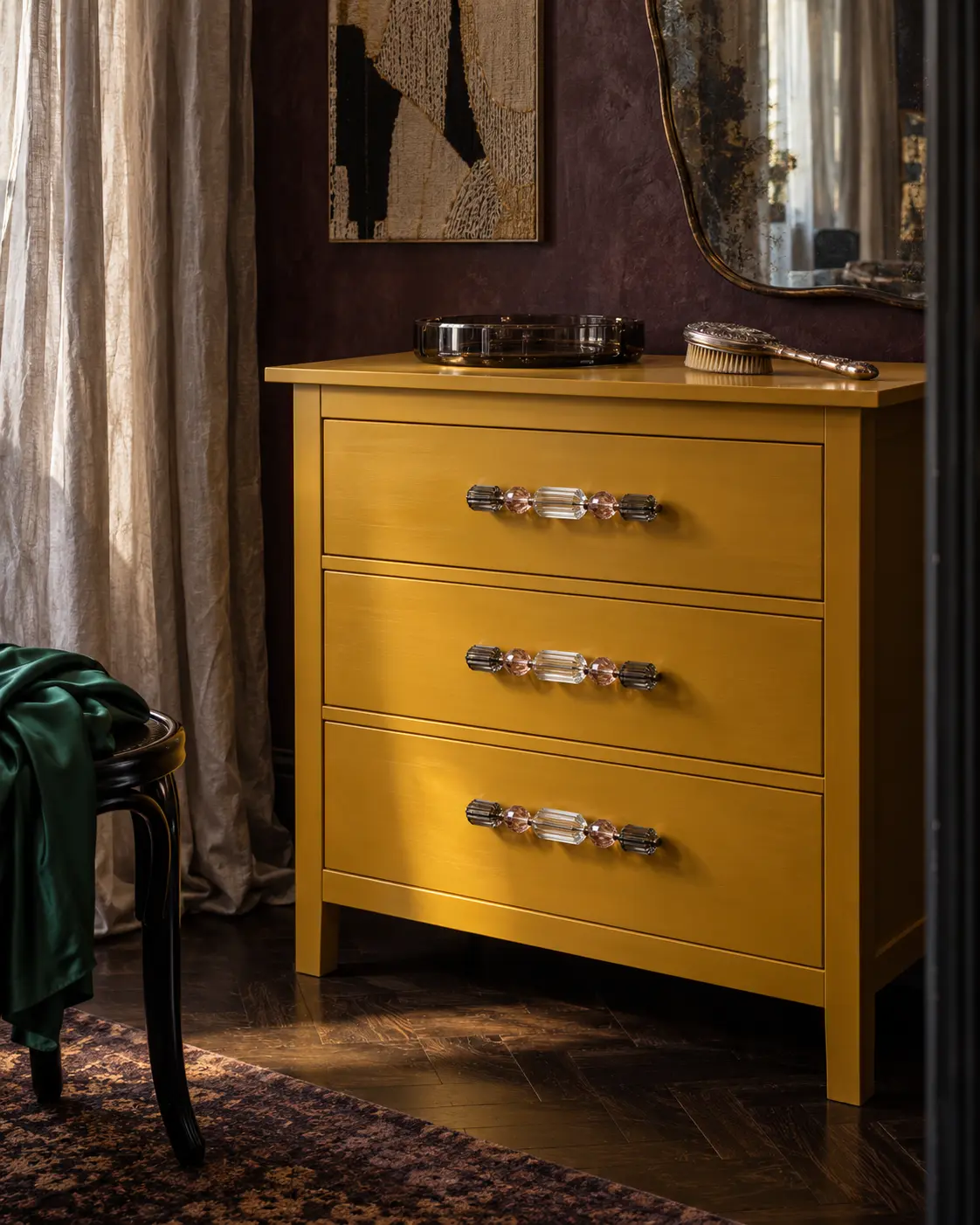
Oversized resin handles. Coloured glass. Polished metal. Ceramic. Strange organic shapes that feel closer to jewellery than cabinet hardware.
And this is one place where custom really makes sense. A handle is small enough to experiment with — including designing and 3D-printing your own in exactly the shape, scale and colour you want.
You don’t need six matching handles either. Sometimes the mismatch is the point.
Think of the furniture as the basic white shirt. The hardware is everything you put with it.
02
Paint is only the beginning.
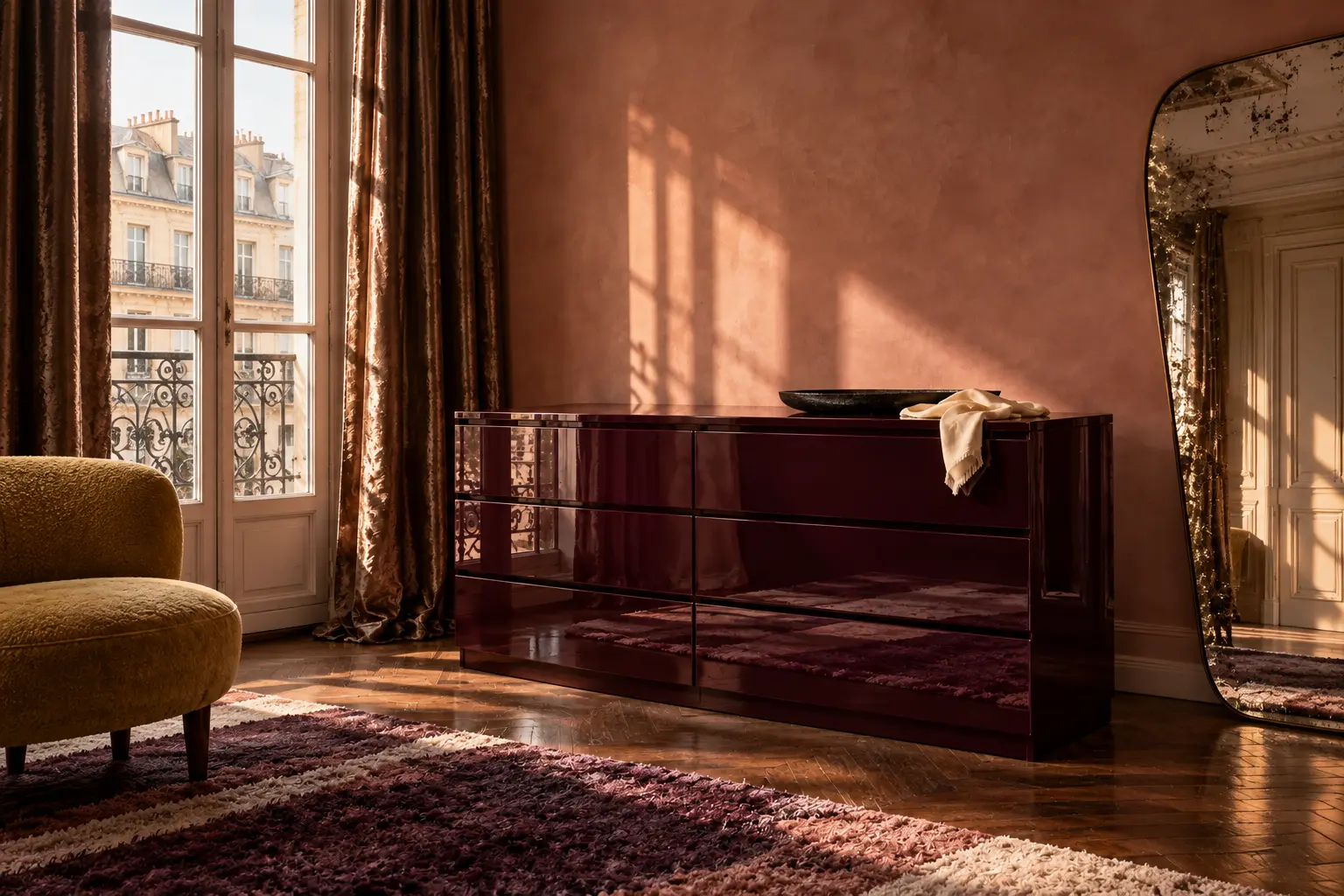
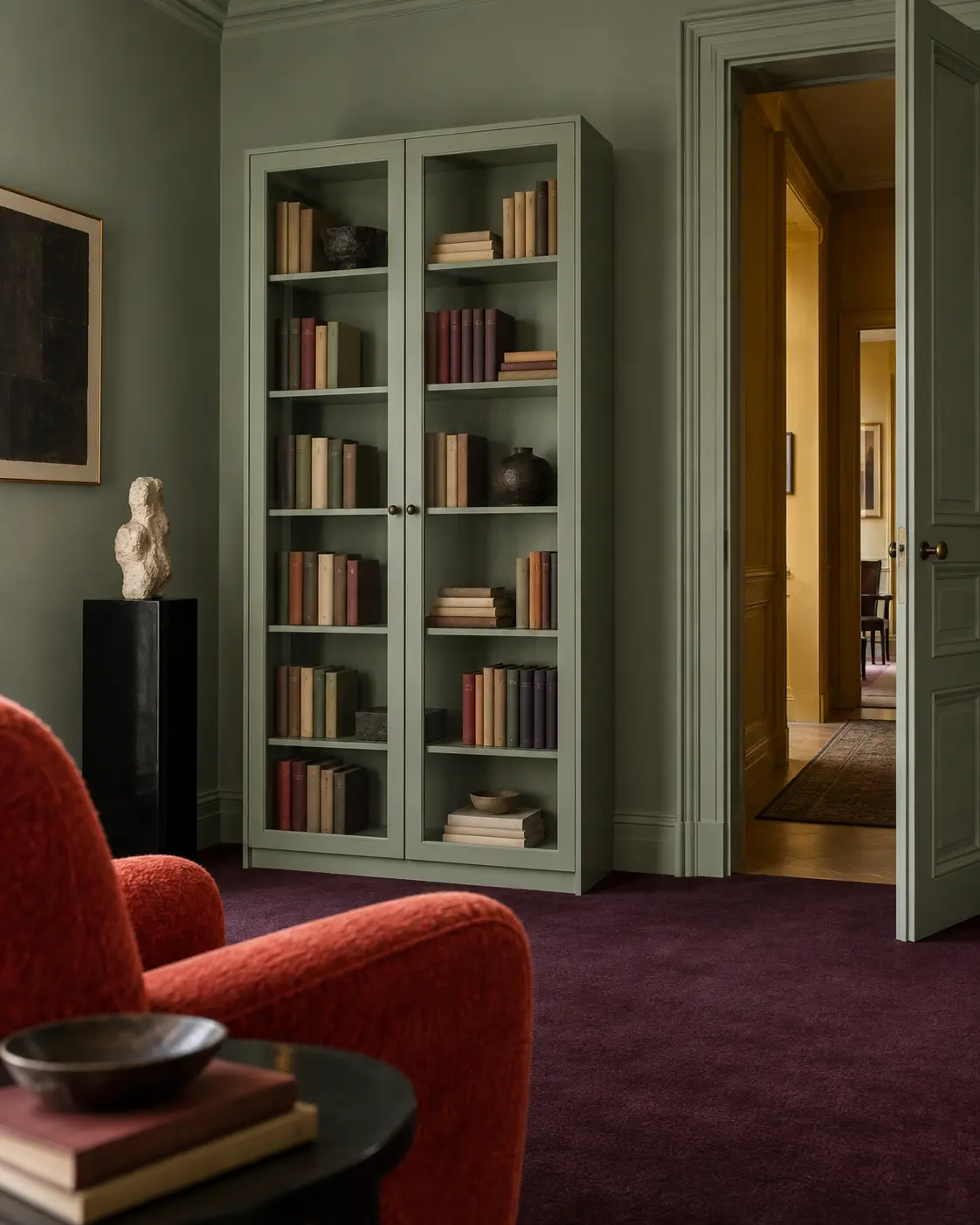
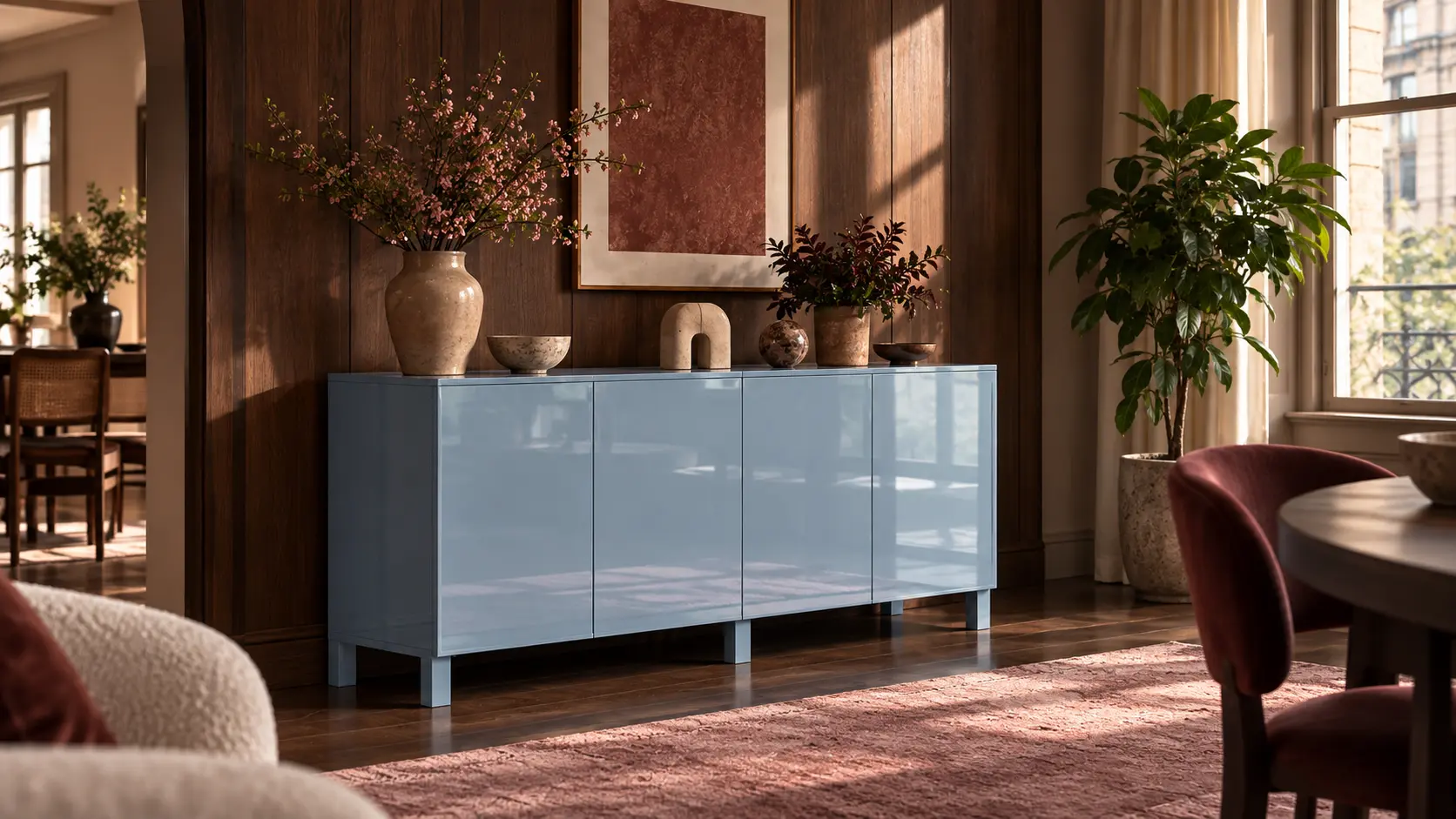
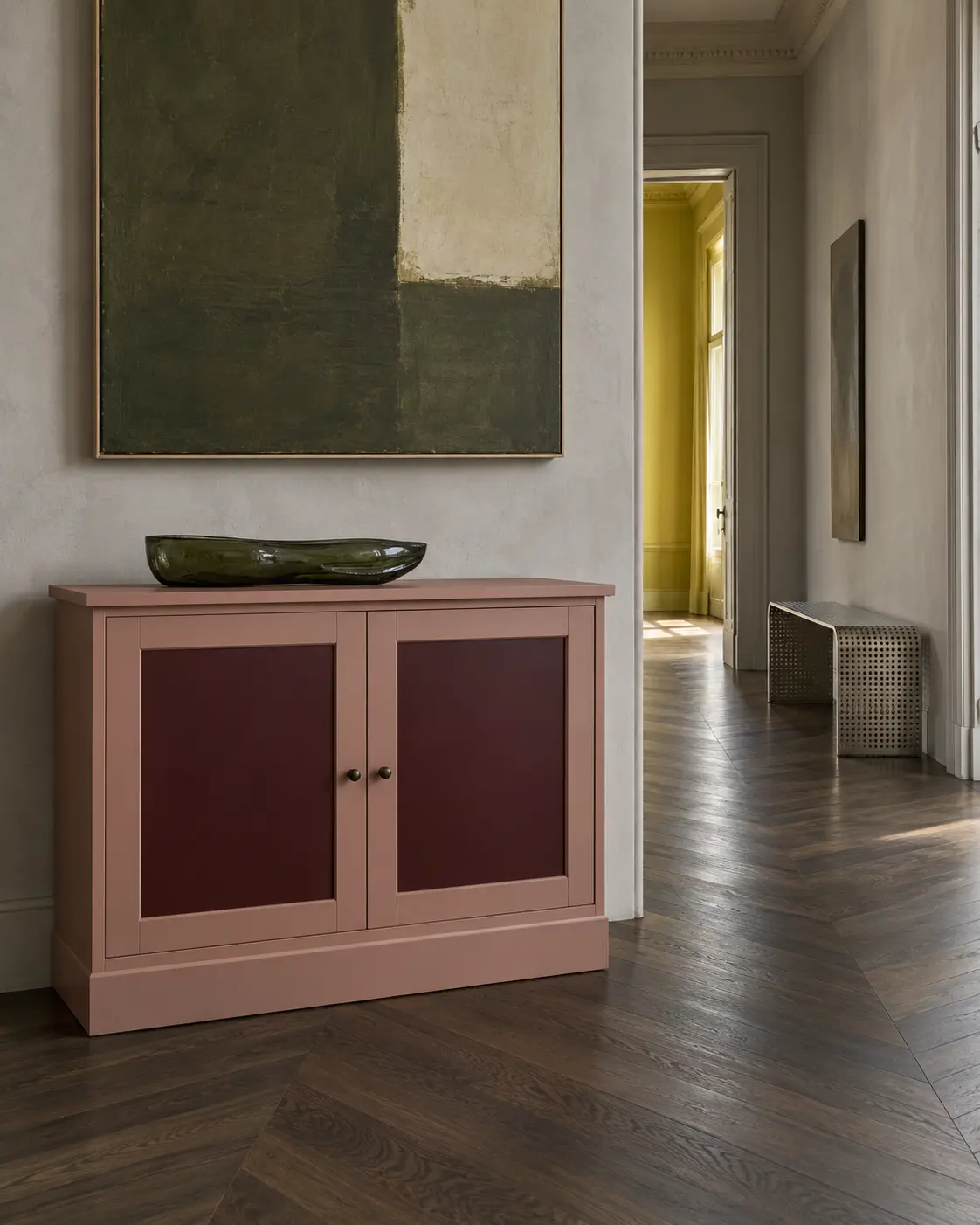
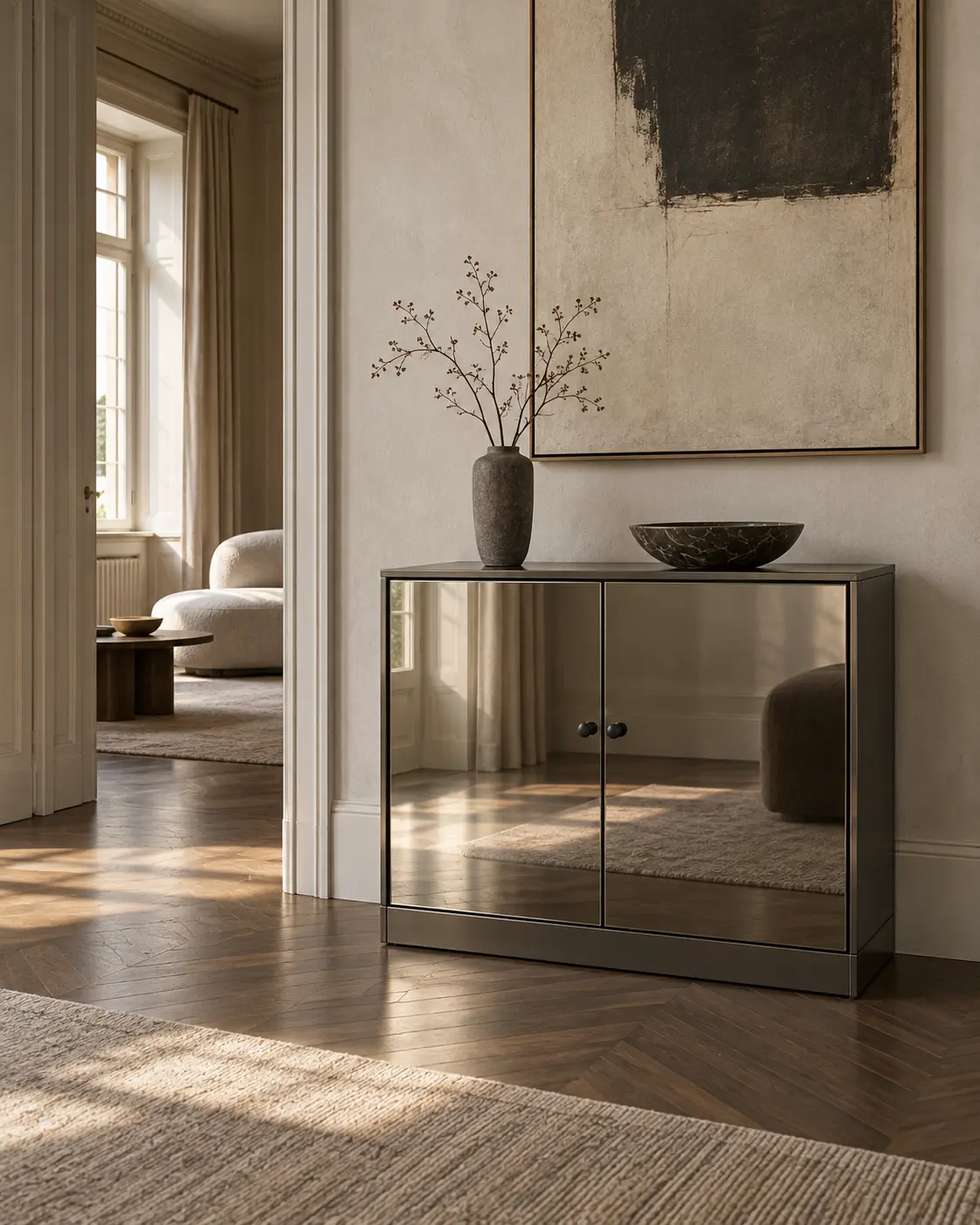
High-gloss lacquer can turn a basic shelving unit into something almost architectural. Reflective metallic finishes bring another possibility entirely — chrome, brushed steel, or tinted mirror-like surfaces that react to everything around them.
And colour behaves differently when it shines.
Olive becomes deeper. Burgundy becomes richer. A strange brown suddenly feels more 1970s Milan than flat-pack furniture.
The transformation doesn’t necessarily come from choosing a louder colour.
Sometimes it comes from changing what the surface does with light.
03
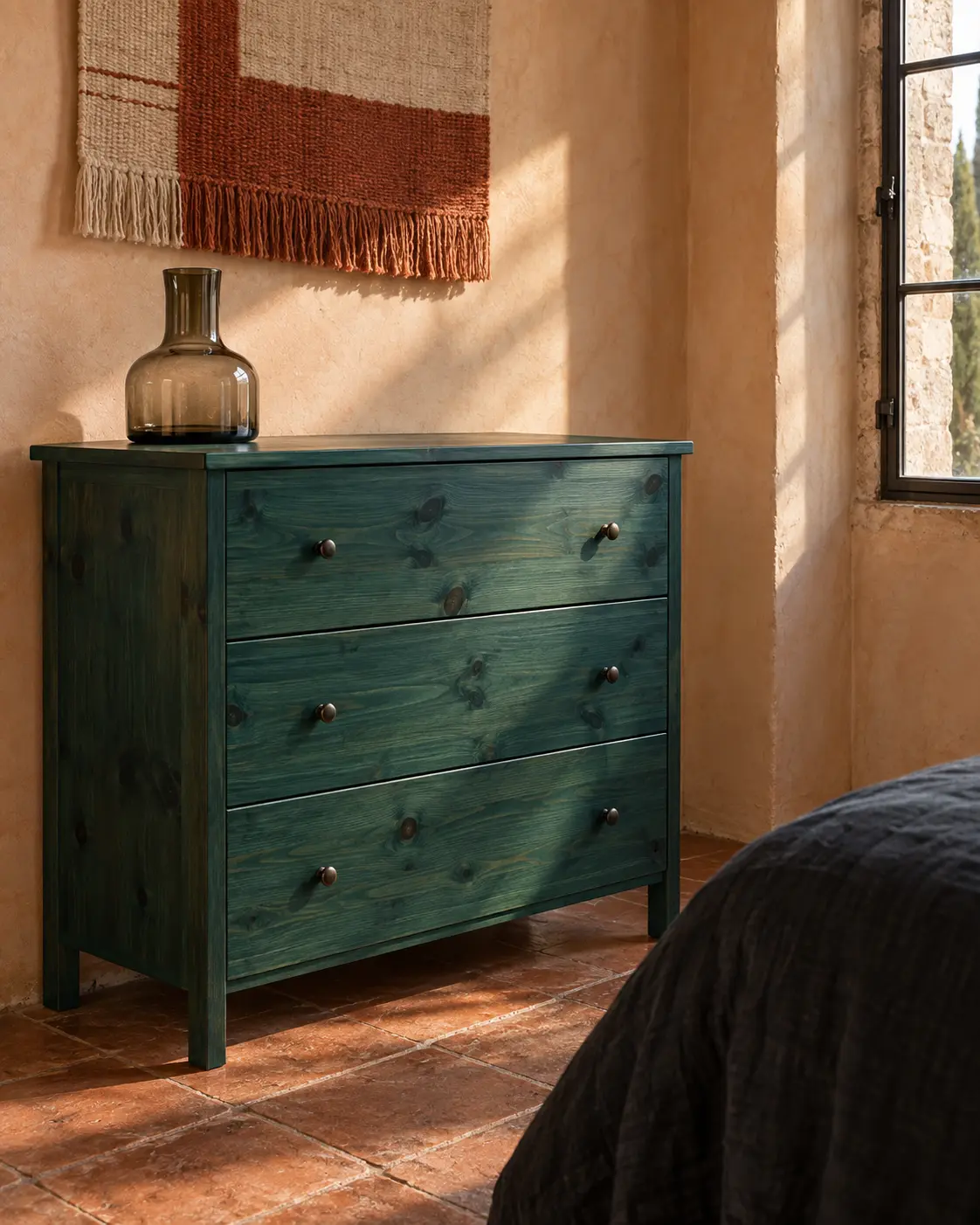
There is something surprisingly revealing about furniture legs.
Swap the predictable ones and suddenly the proportions of the whole piece change.
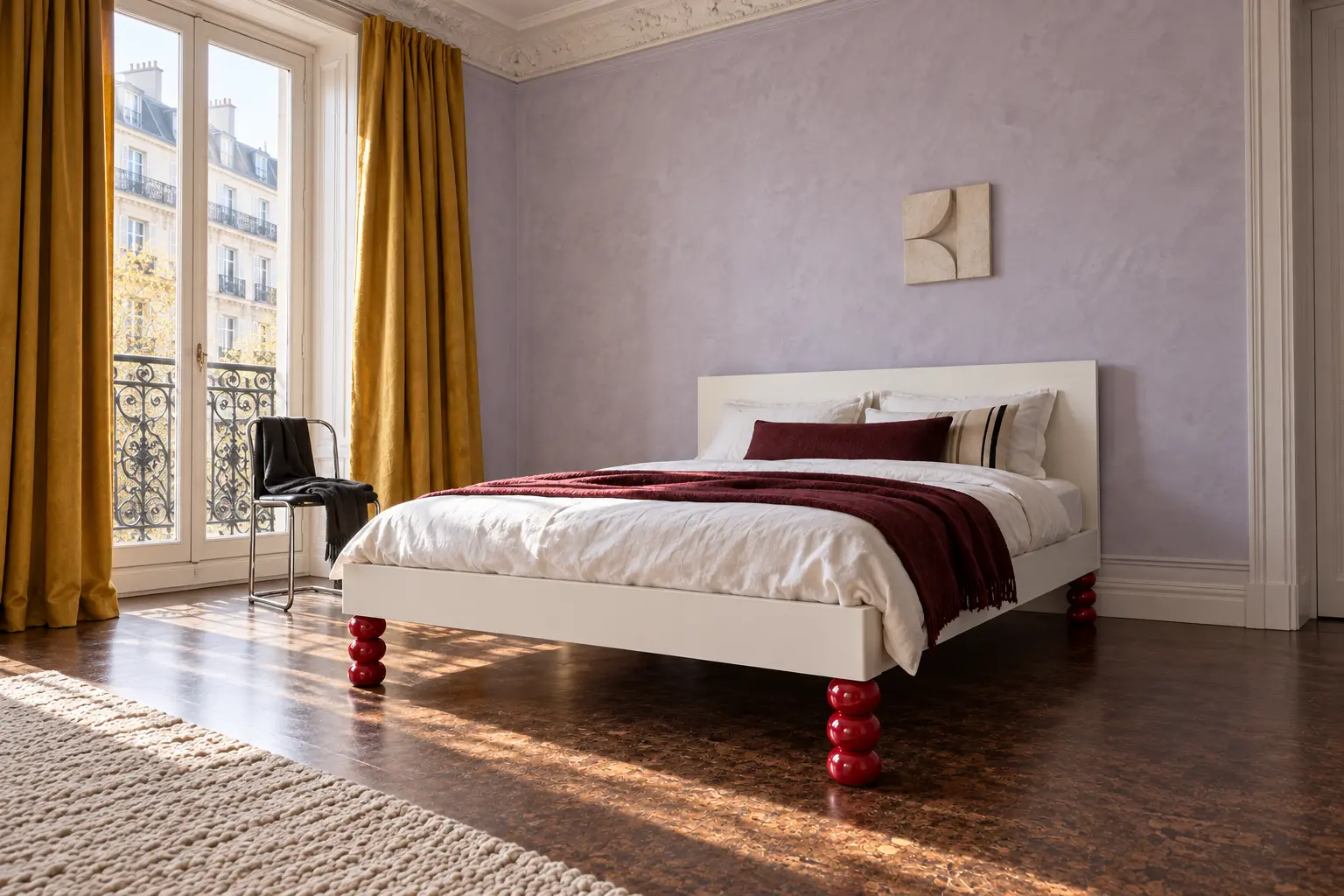
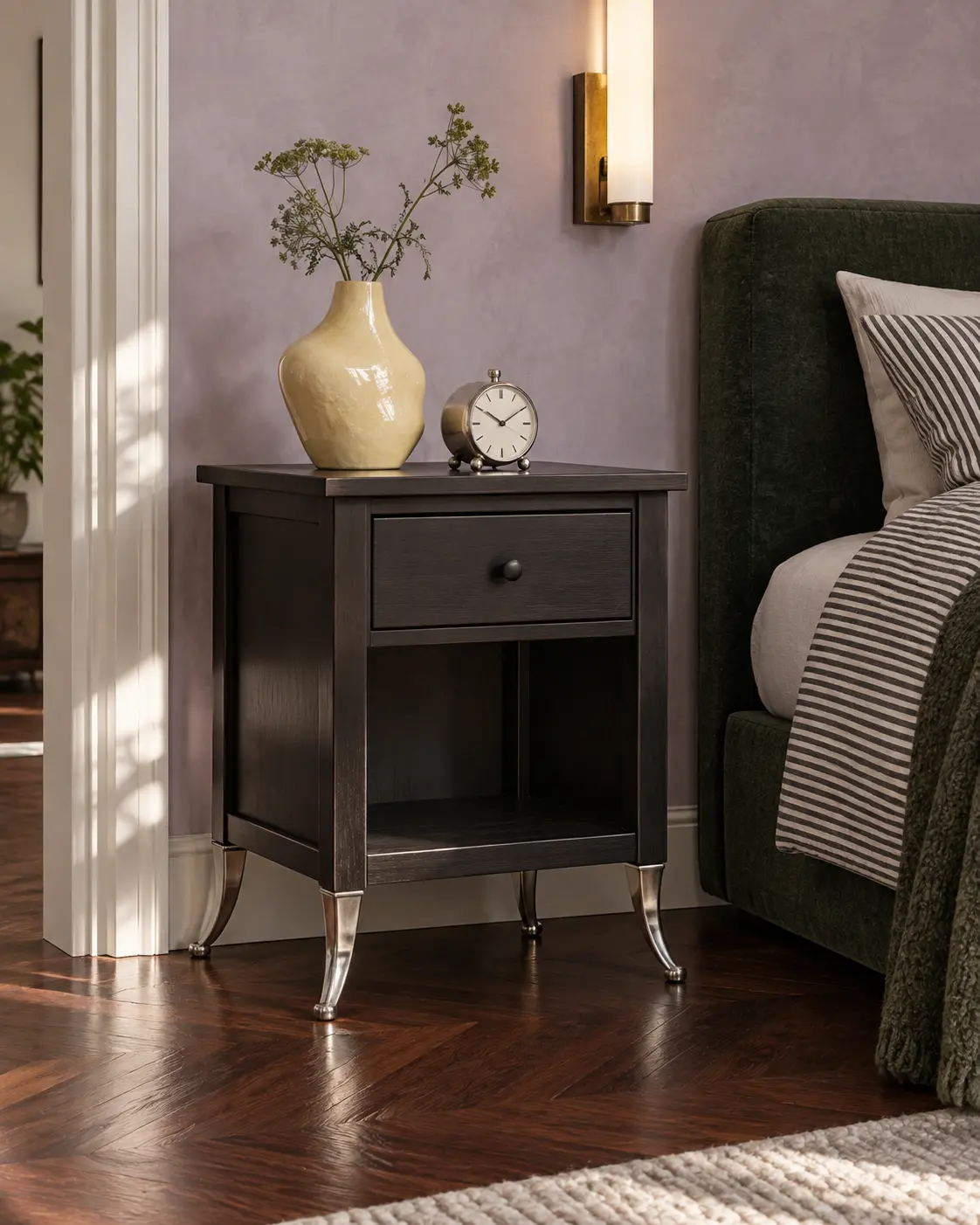
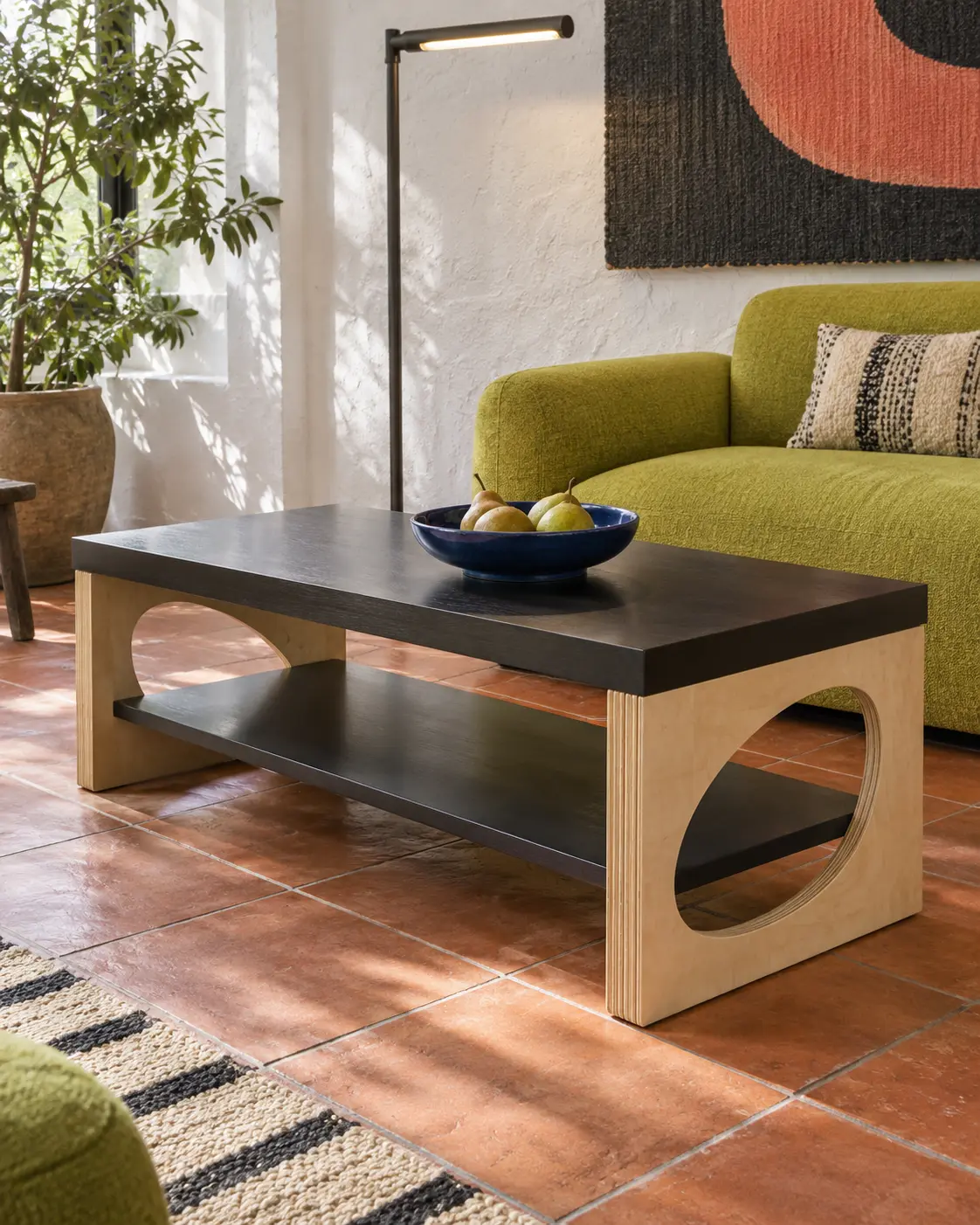
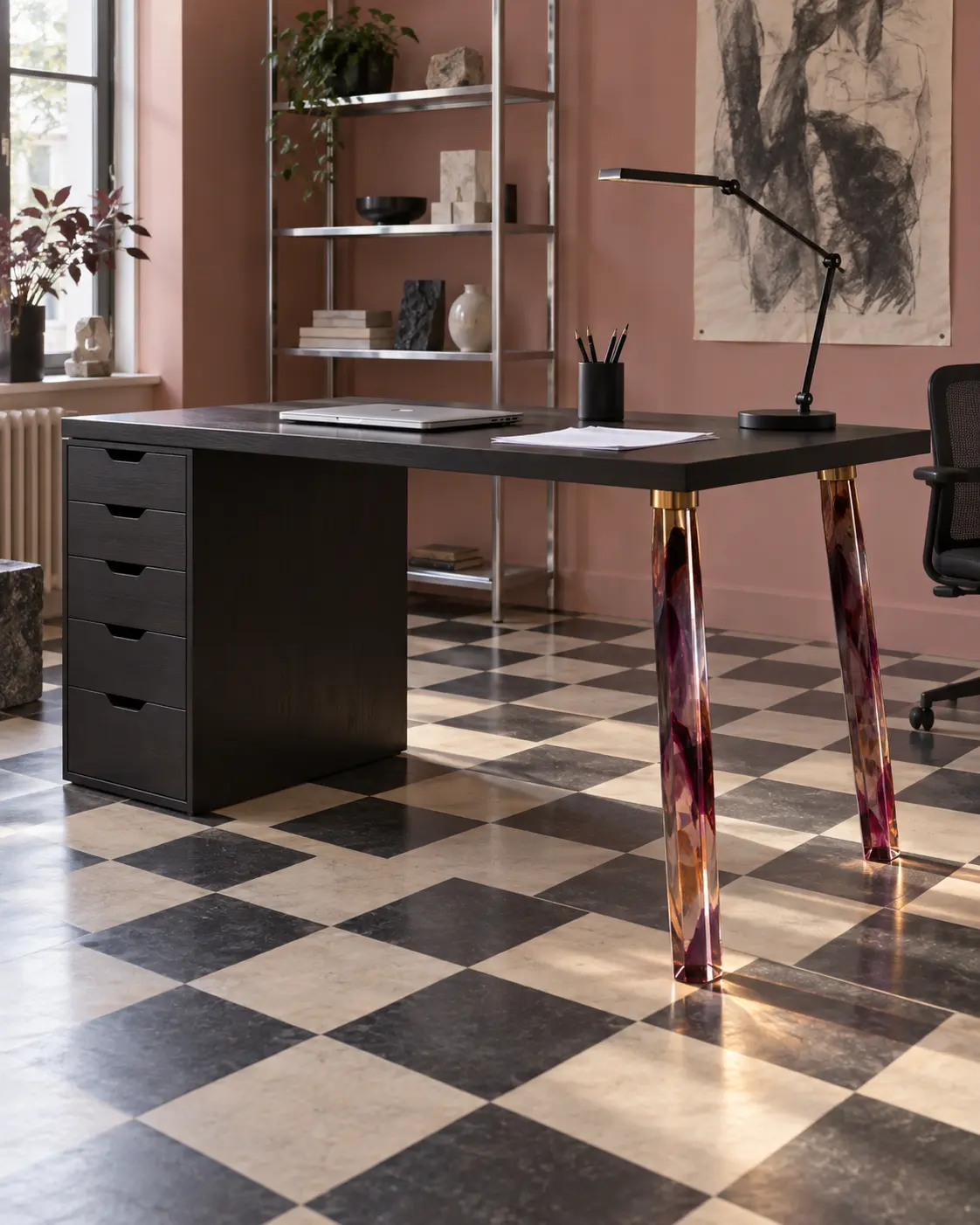
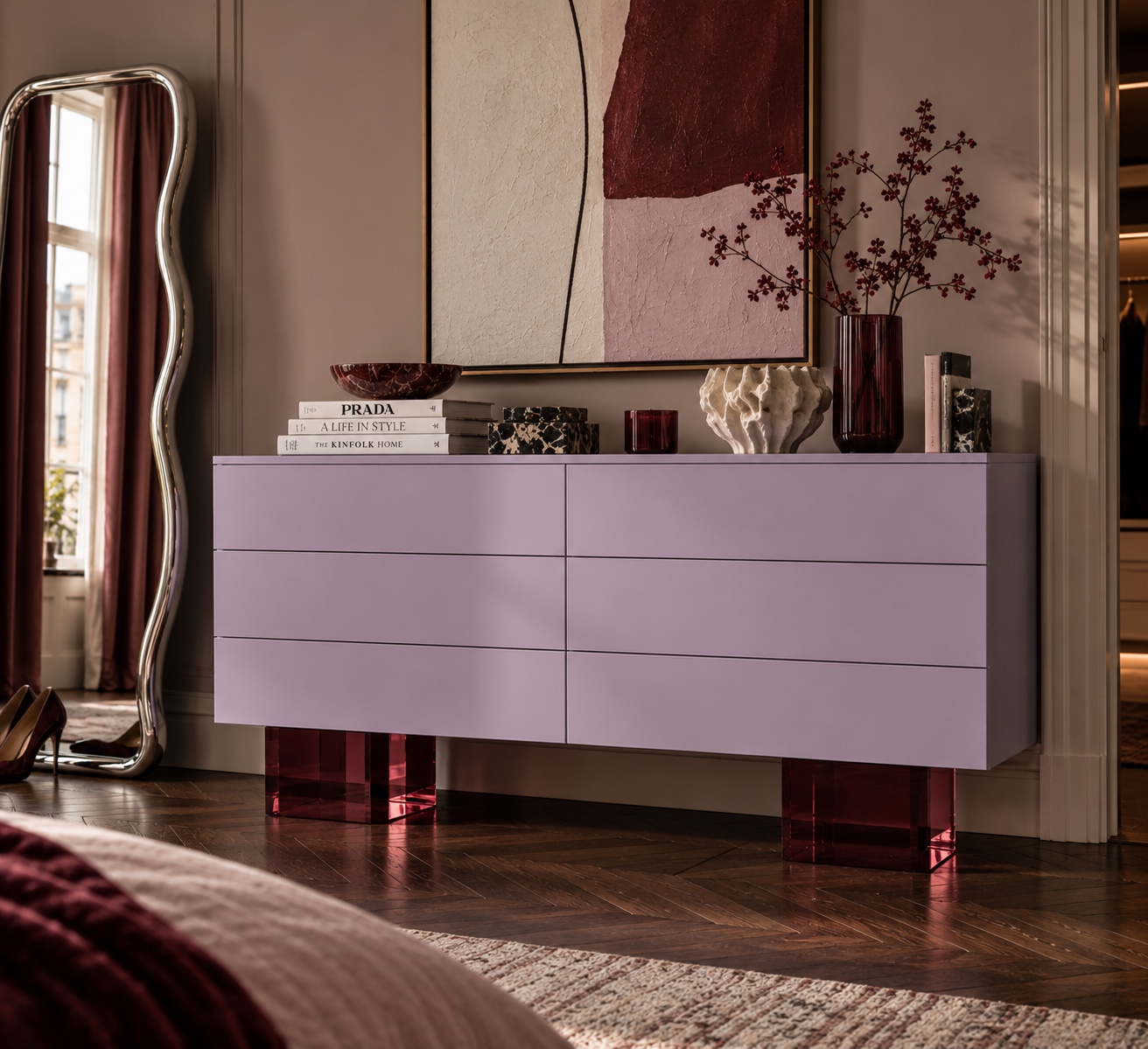
Stacked wooden spheres can make a simple cabinet feel almost sculptural. Translucent burgundy supports give a pale lilac dresser an entirely different personality. A continuous cobalt frame can turn familiar cube storage into a graphic piece of furniture.
This is also where custom fabrication becomes interesting. Decorative elements can be designed specifically for a piece, and some can even be 3D-printed — although anything structural needs to be properly engineered for the weight it carries.
The goal isn’t simply to lift the furniture higher.
Give it a different stance.
04
Don’t change the whole piece. Change the part your eye notices first.
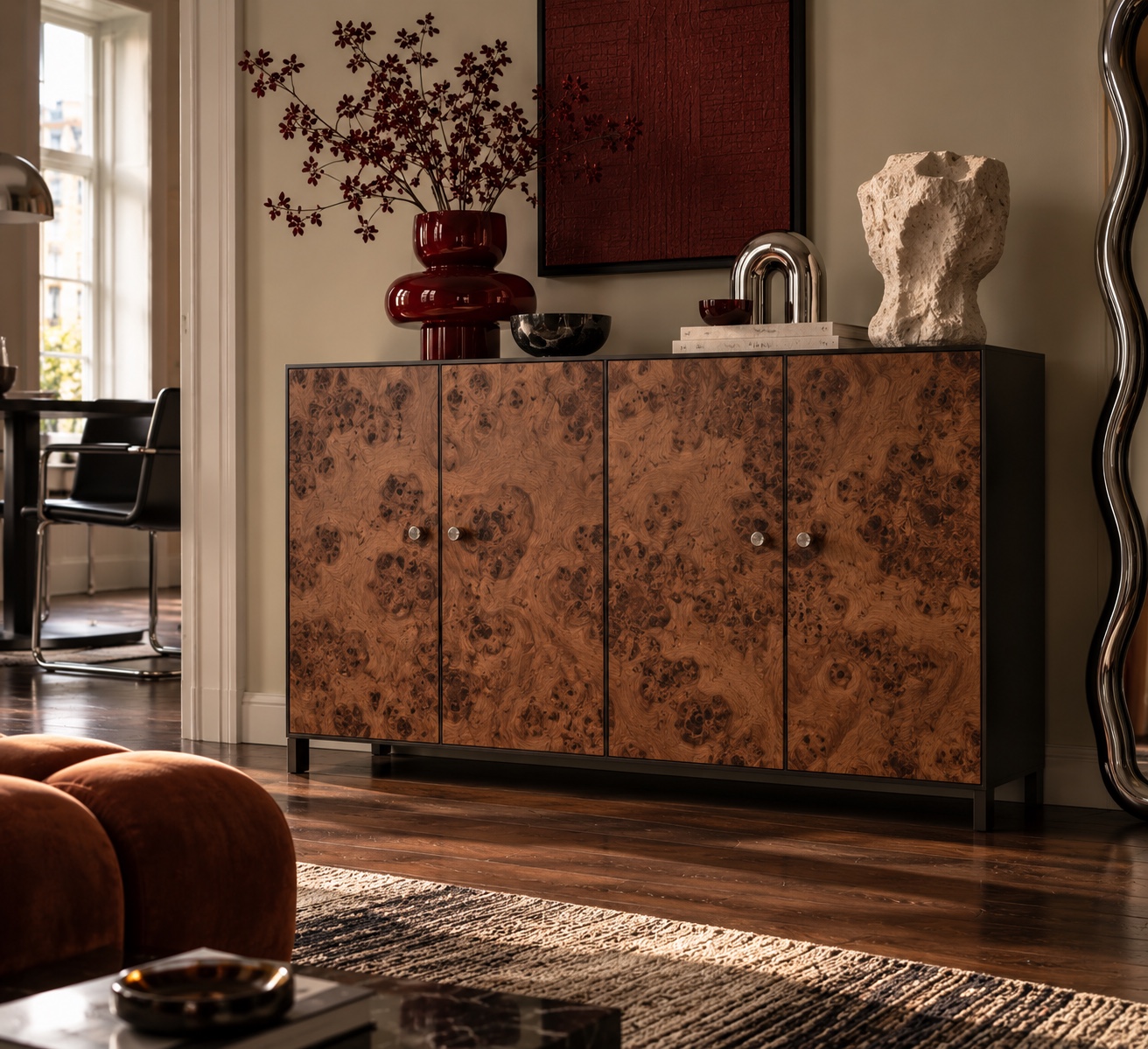
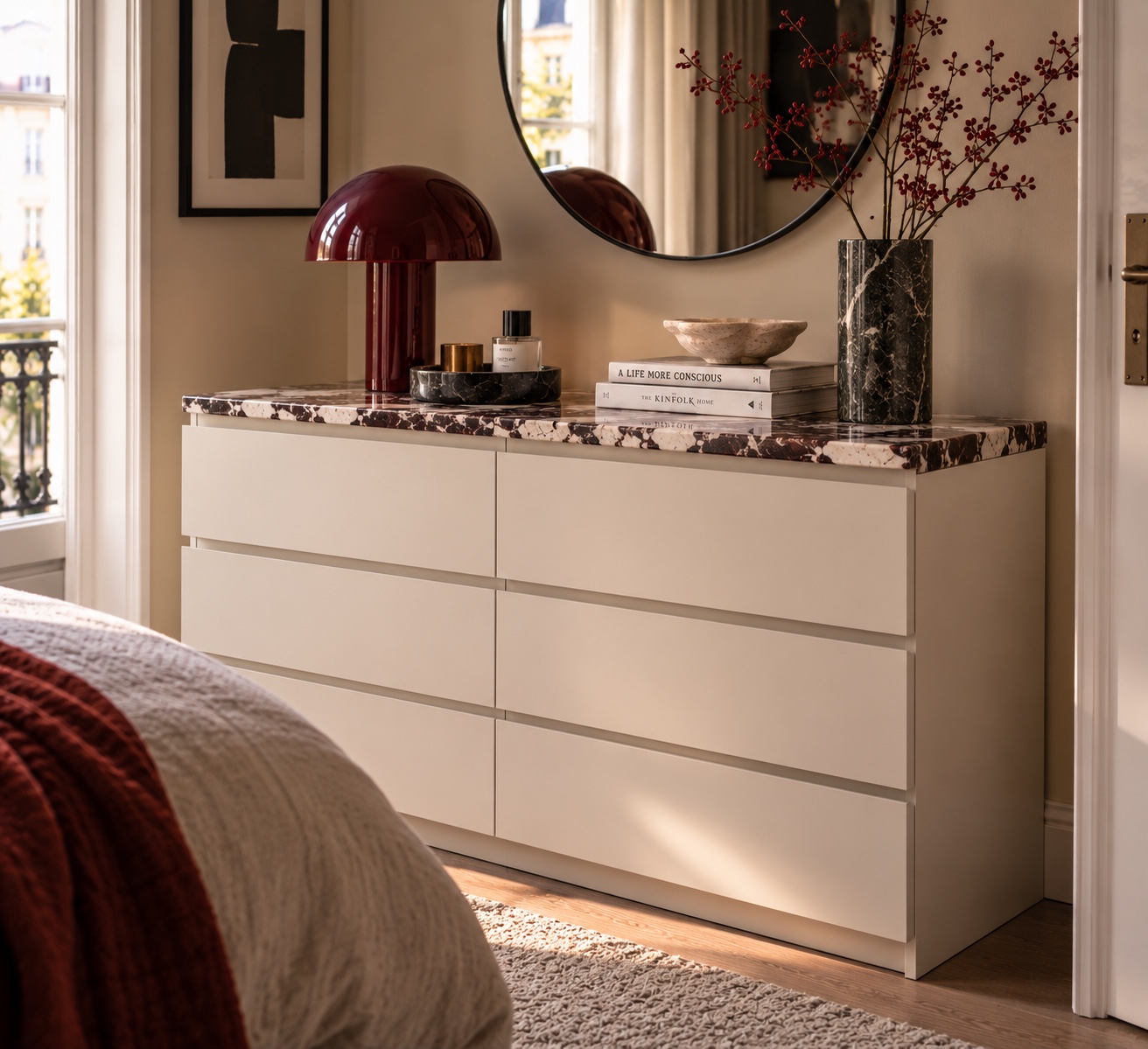
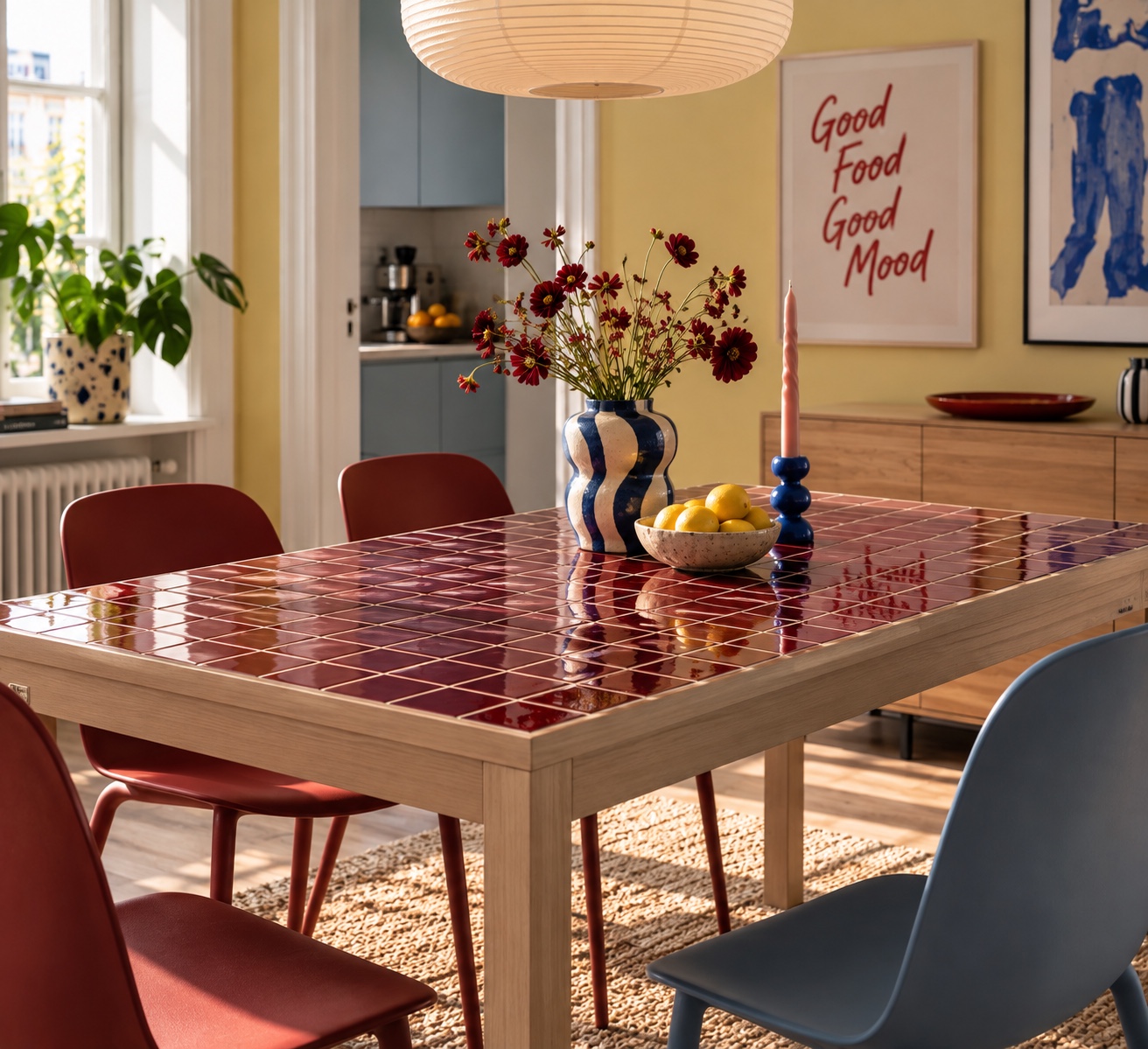
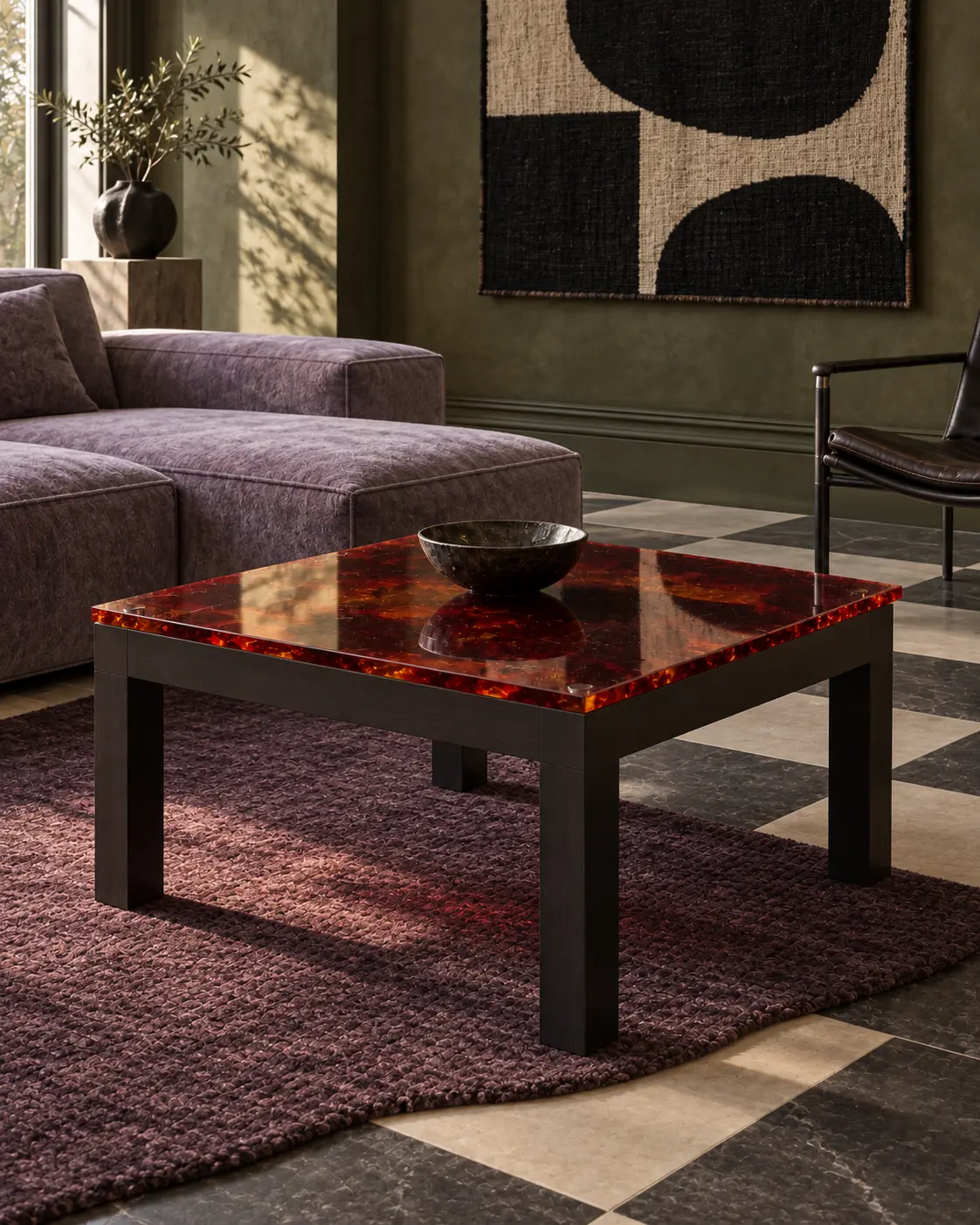
A dramatic burl veneer across plain cabinet fronts. A slab of heavily veined stone on top of a simple dresser. Small glossy tiles covering an otherwise ordinary tabletop.
These additions work because the original furniture is still there.
You’re not trying to hide its simplicity. You’re using that simplicity as a background for one material that has much more personality.
And one good material is usually stronger than five decorative tricks.
05
Flat fronts are practical. They are also an excellent blank canvas.
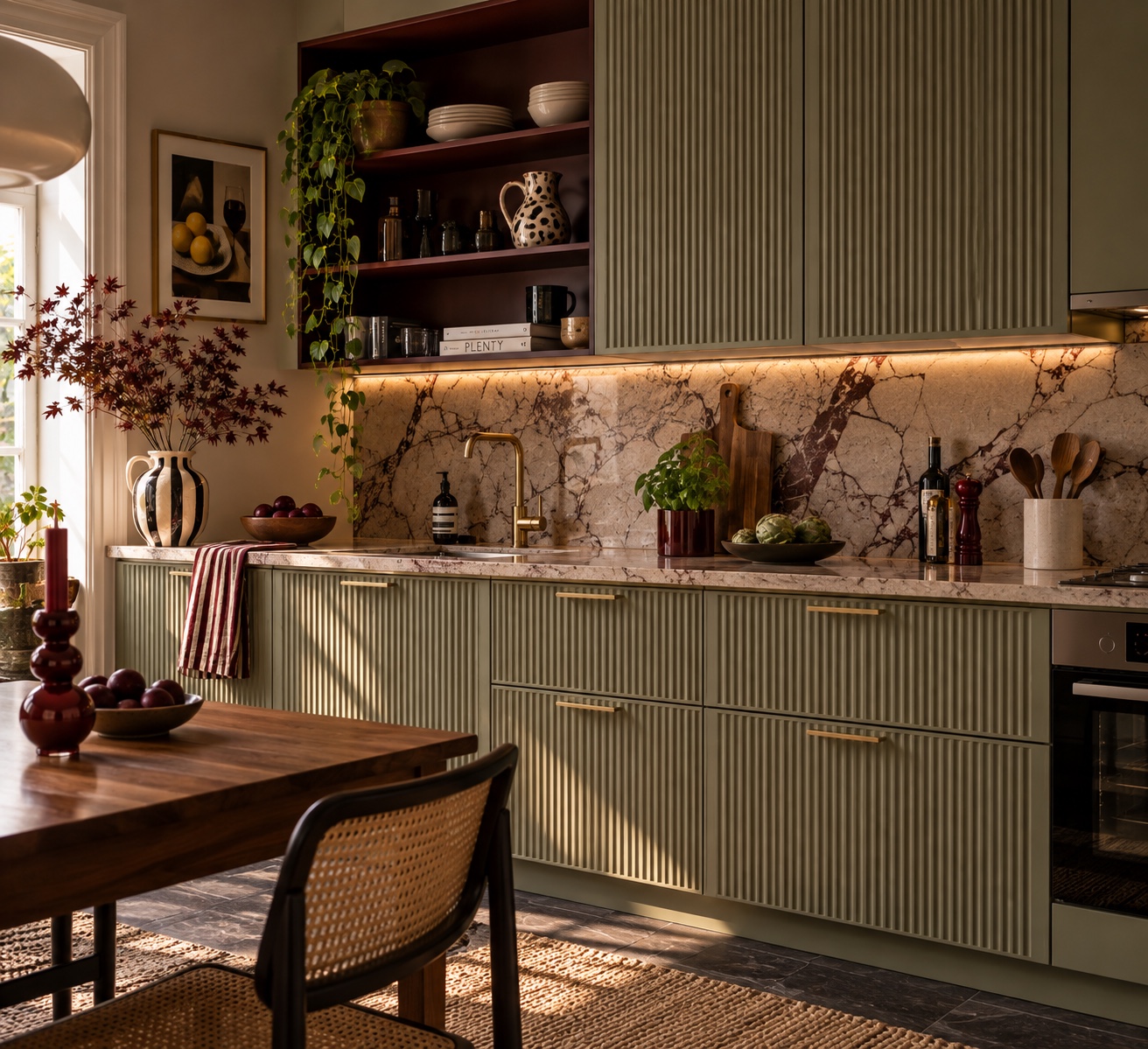
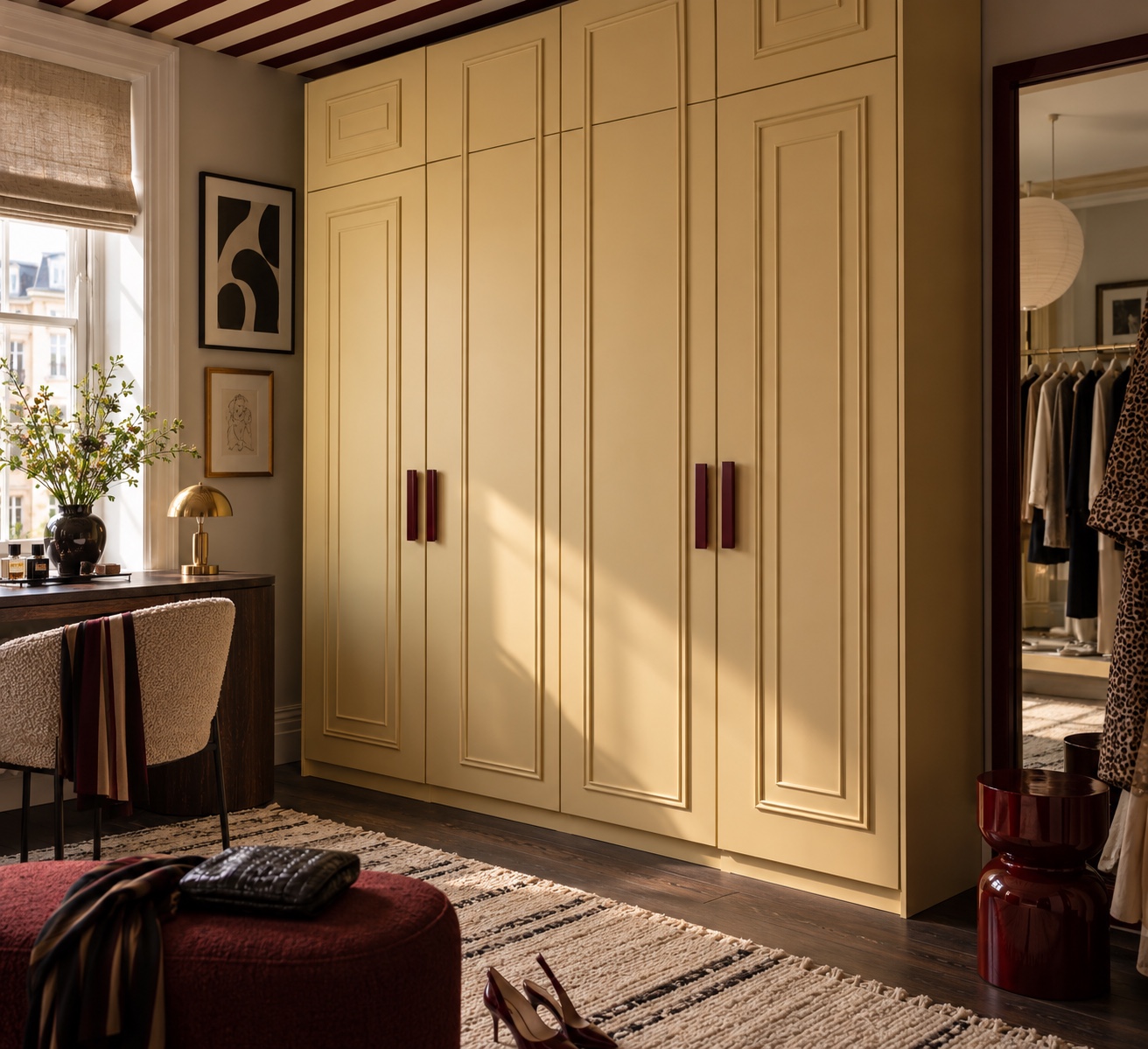
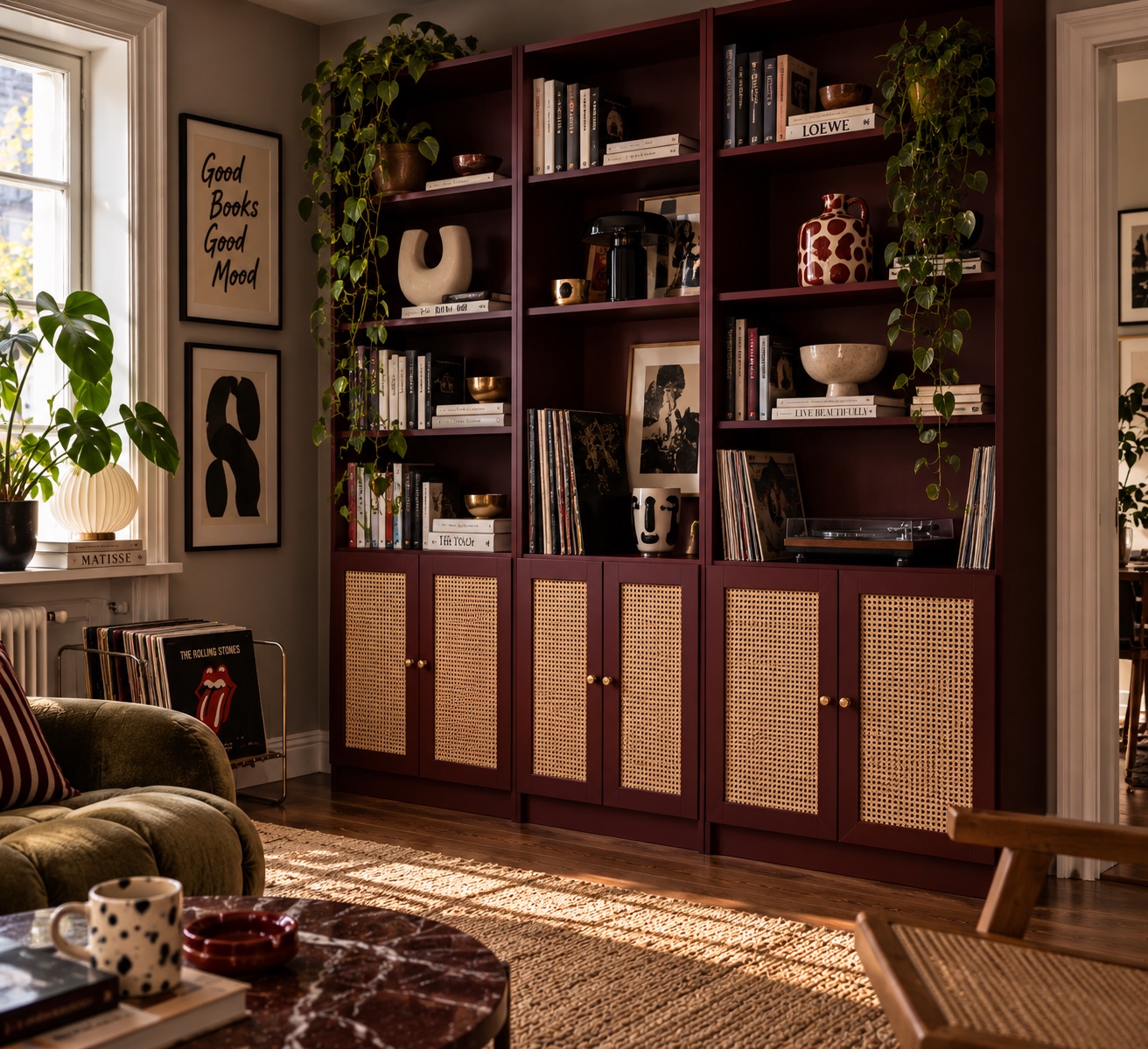
Thin applied mouldings can make a plain wardrobe feel built-in. Cane inserted into cabinet doors introduces texture and transparency. Fluting can completely change the rhythm of basic kitchen fronts.
None of these ideas needs to make the furniture ornate.
The interesting part is the tension between the very simple IKEA structure and a detail that feels specific, tactile and slightly unexpected.
Mass-produced underneath.
Personal on the surface.
06
Not every IKEA piece needs fixing.
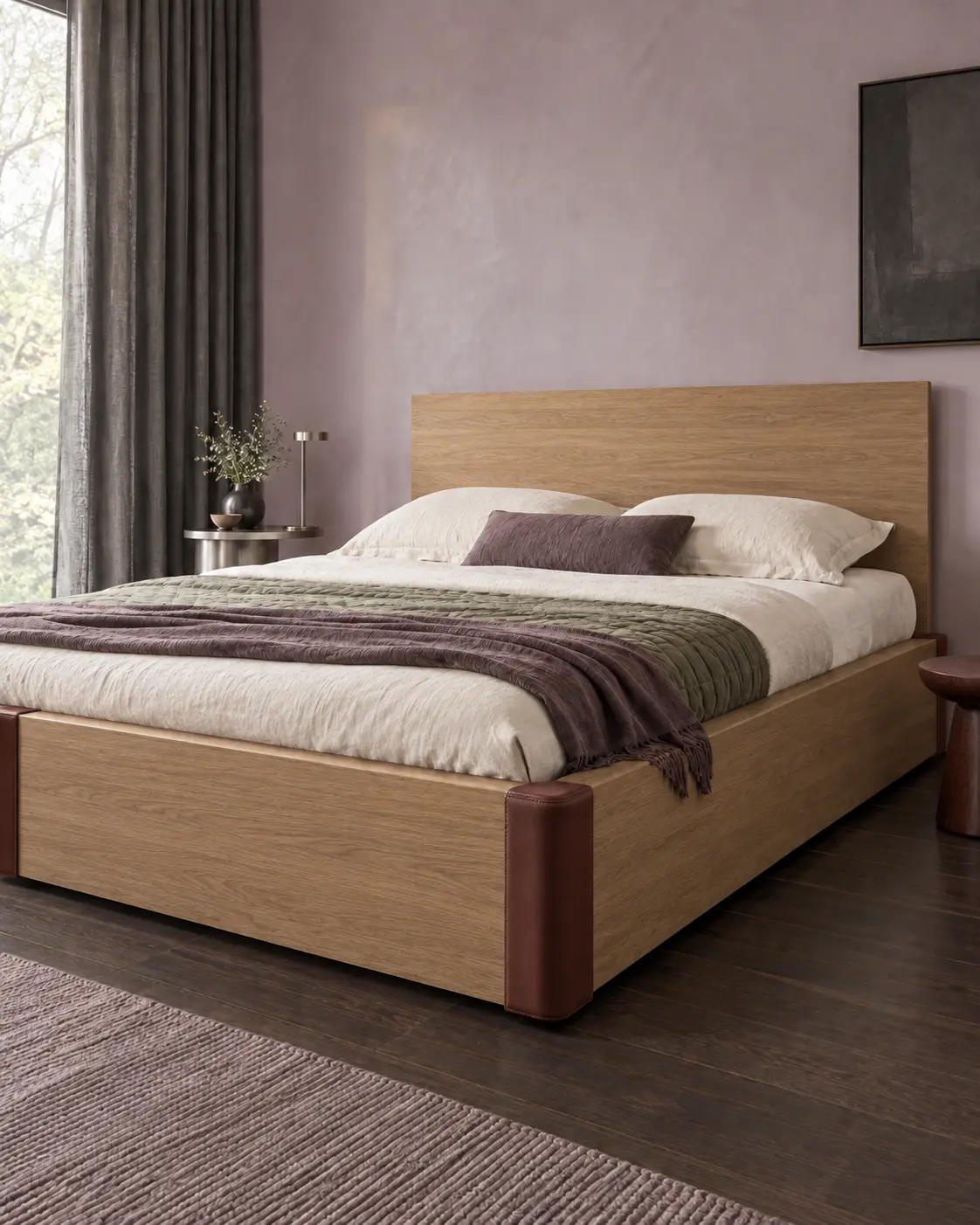
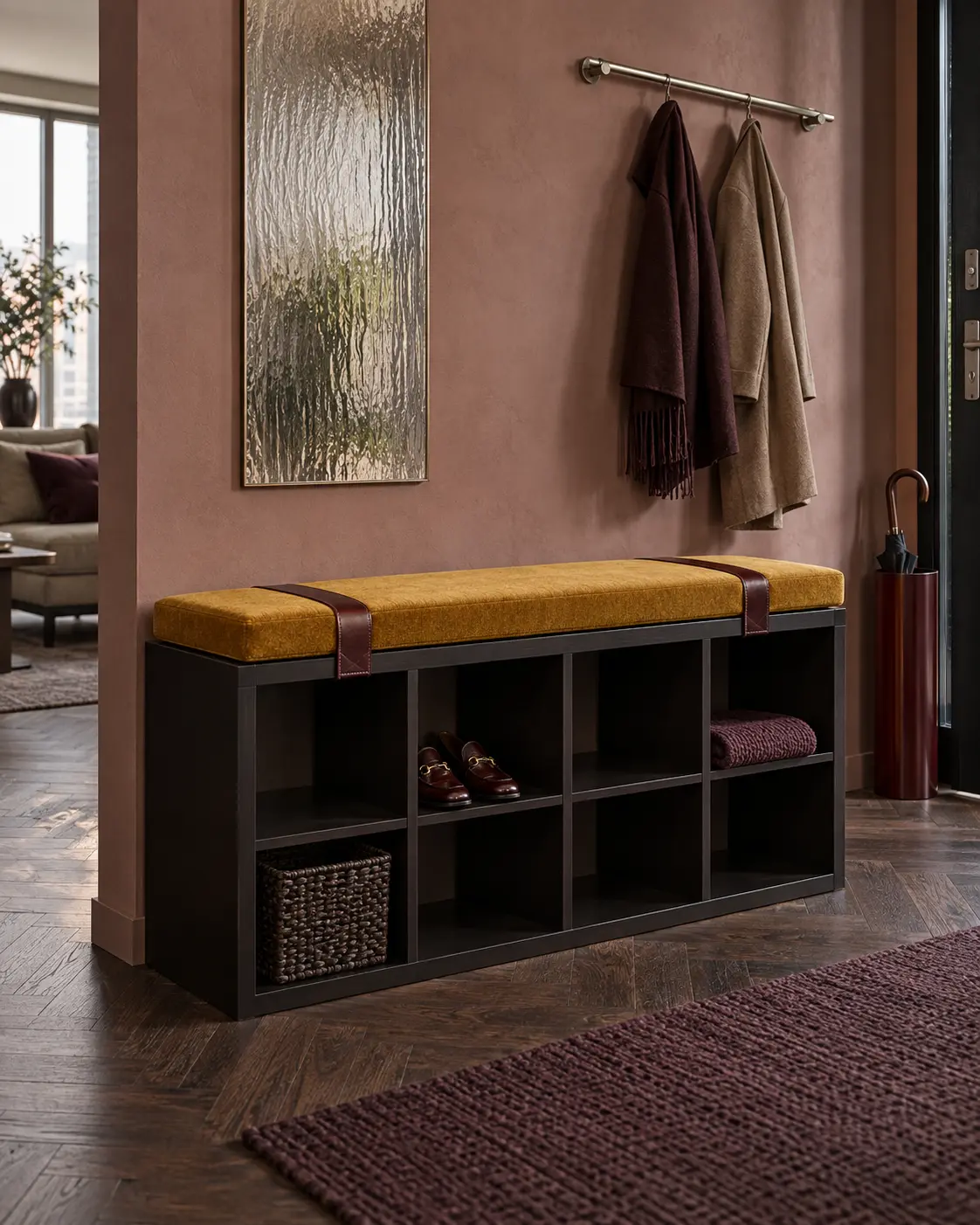
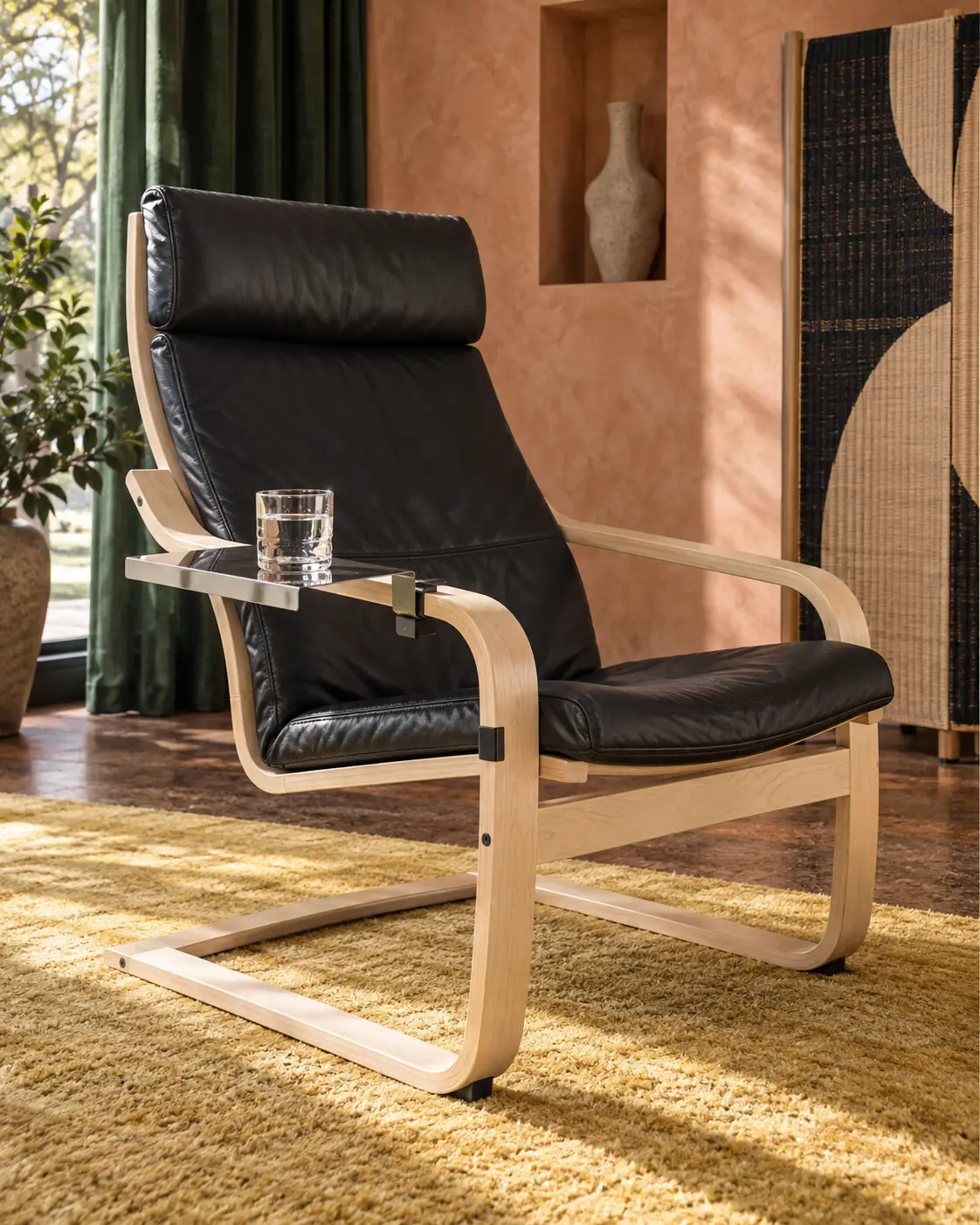
Some of the newest designs are good precisely because they are simple enough to live in very different worlds.
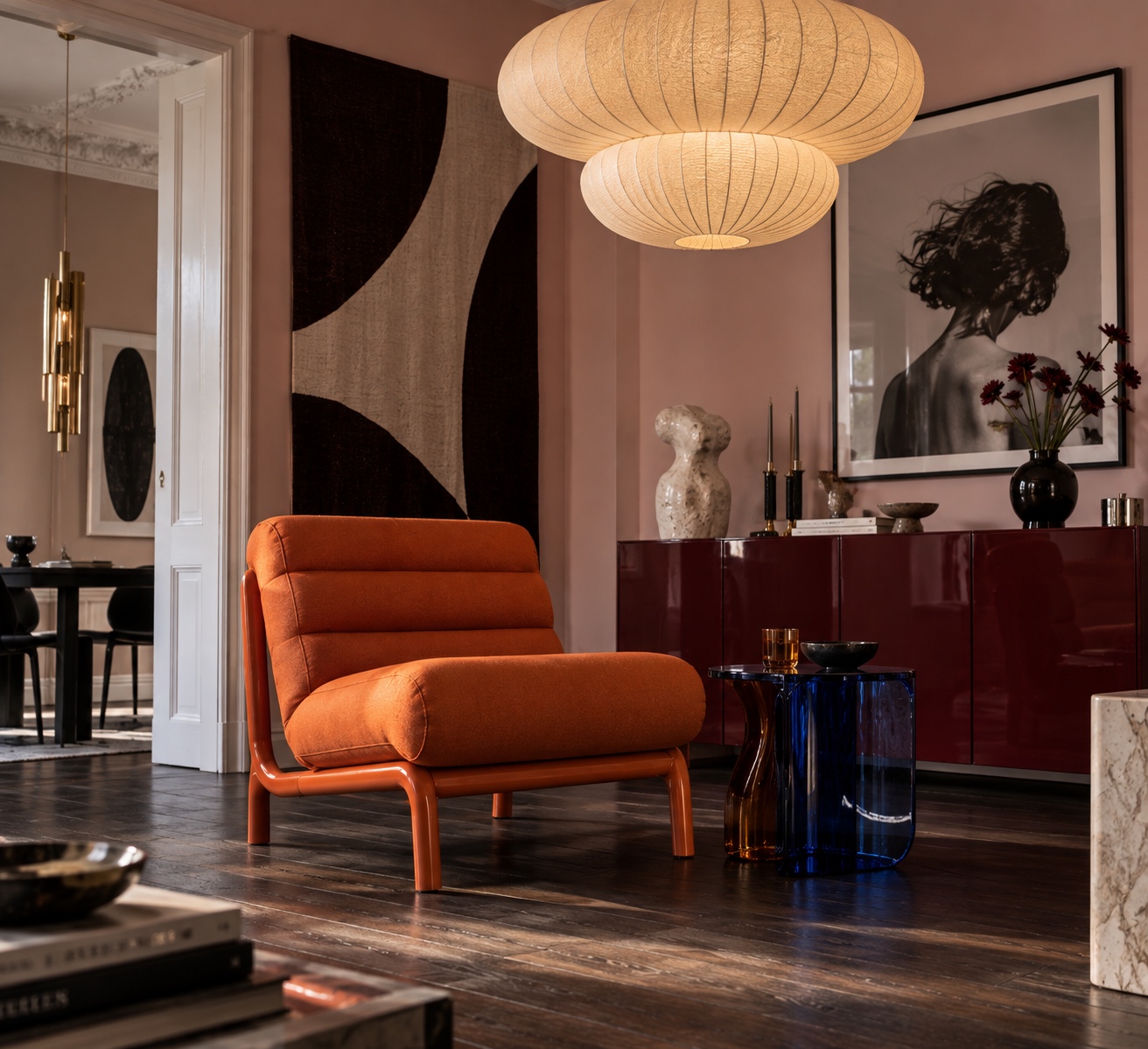
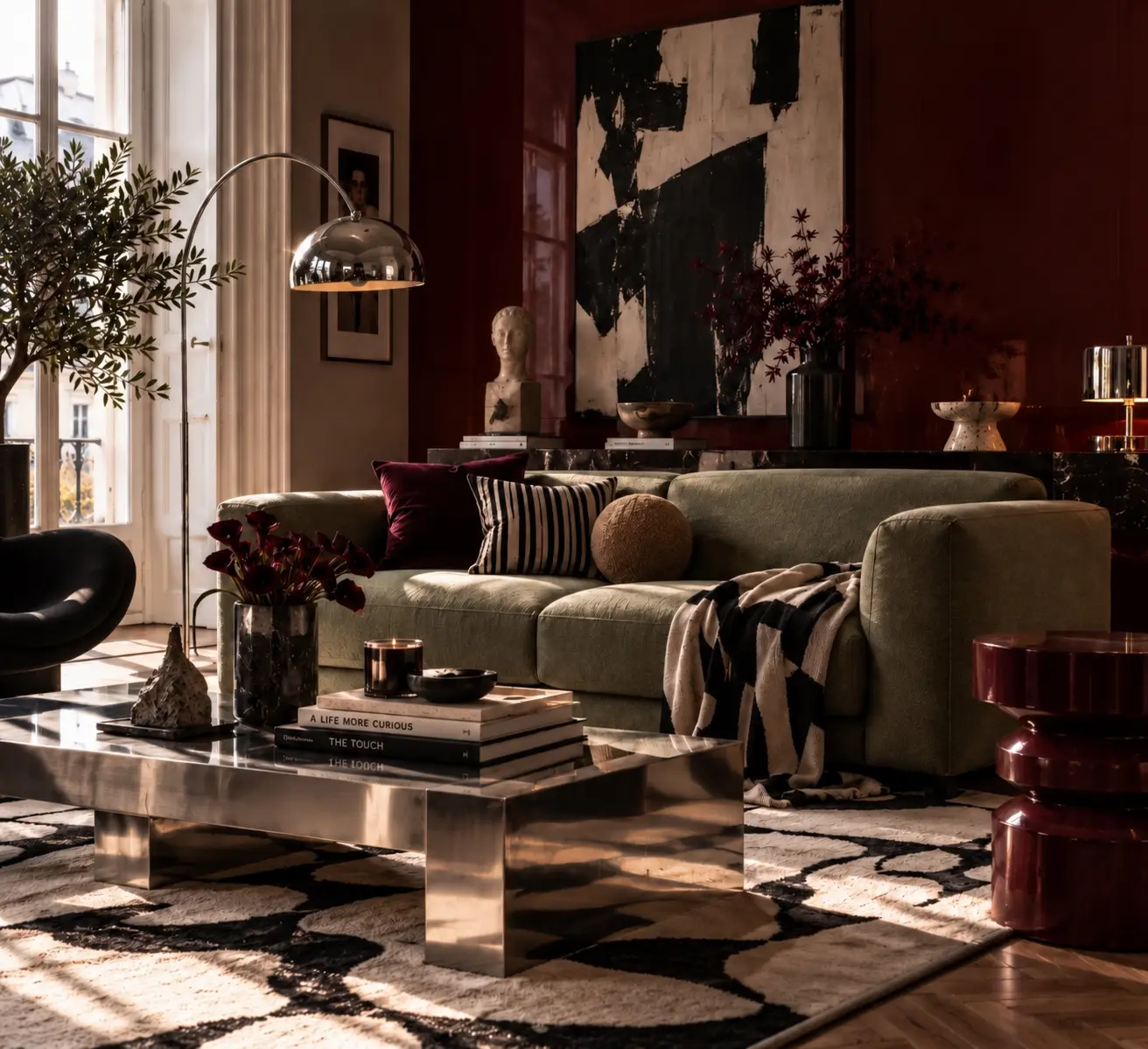
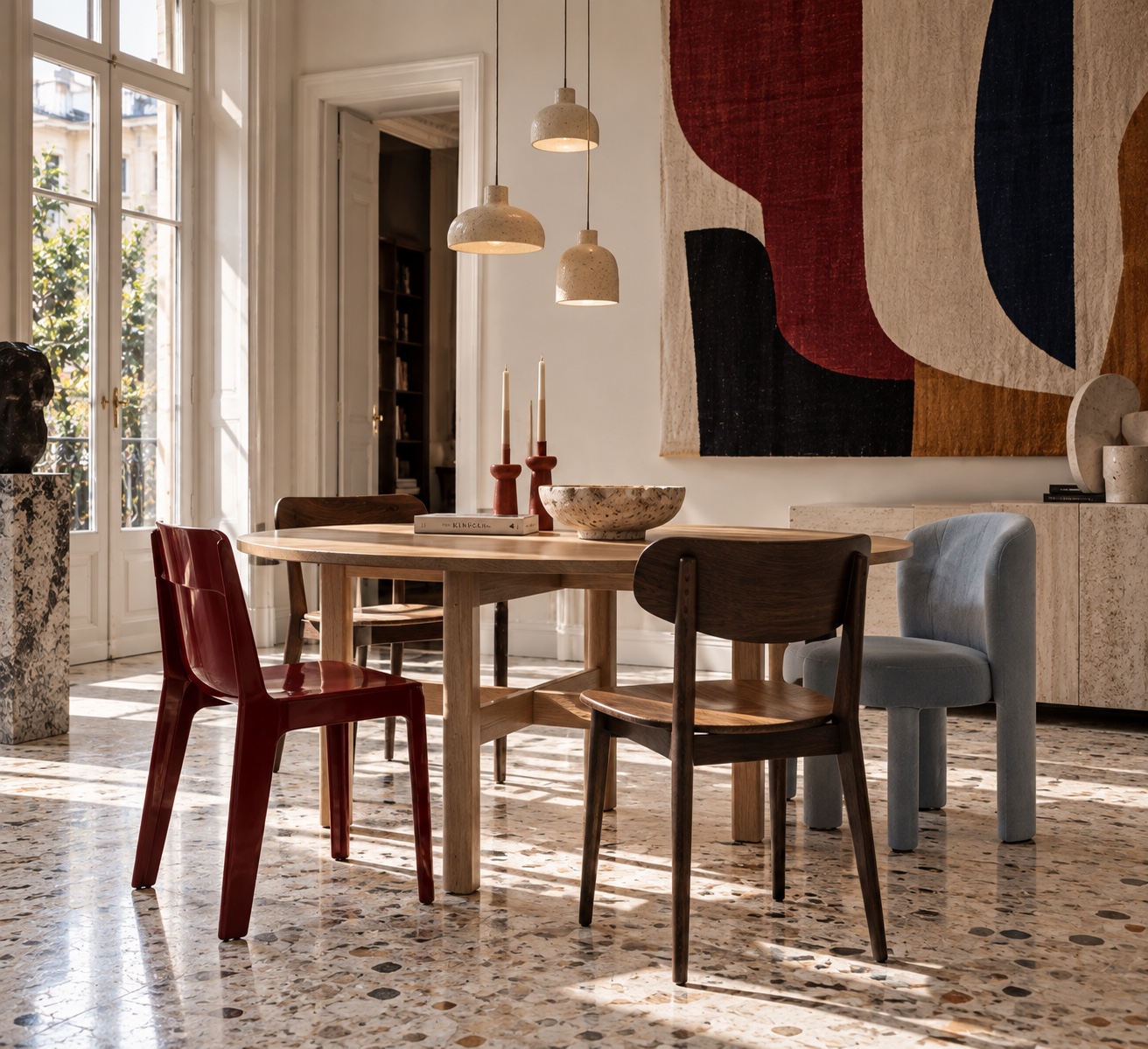
Take the sofa out of the showroom and put it beside vintage lighting, serious art and something slightly strange. Put the orange chair in a room where orange isn’t the obvious choice. Pair the simple dining table with chairs that were never intended to match.
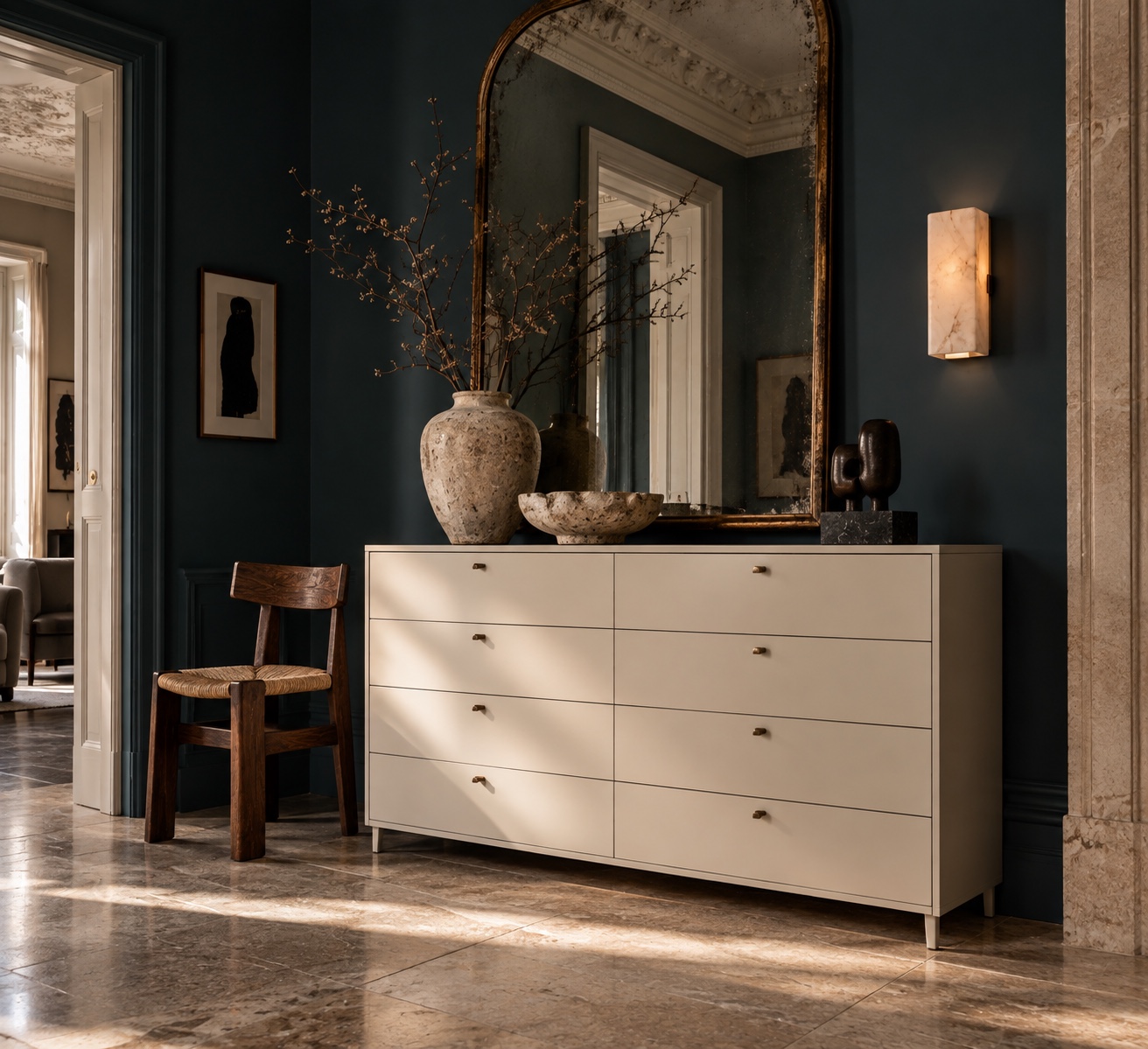
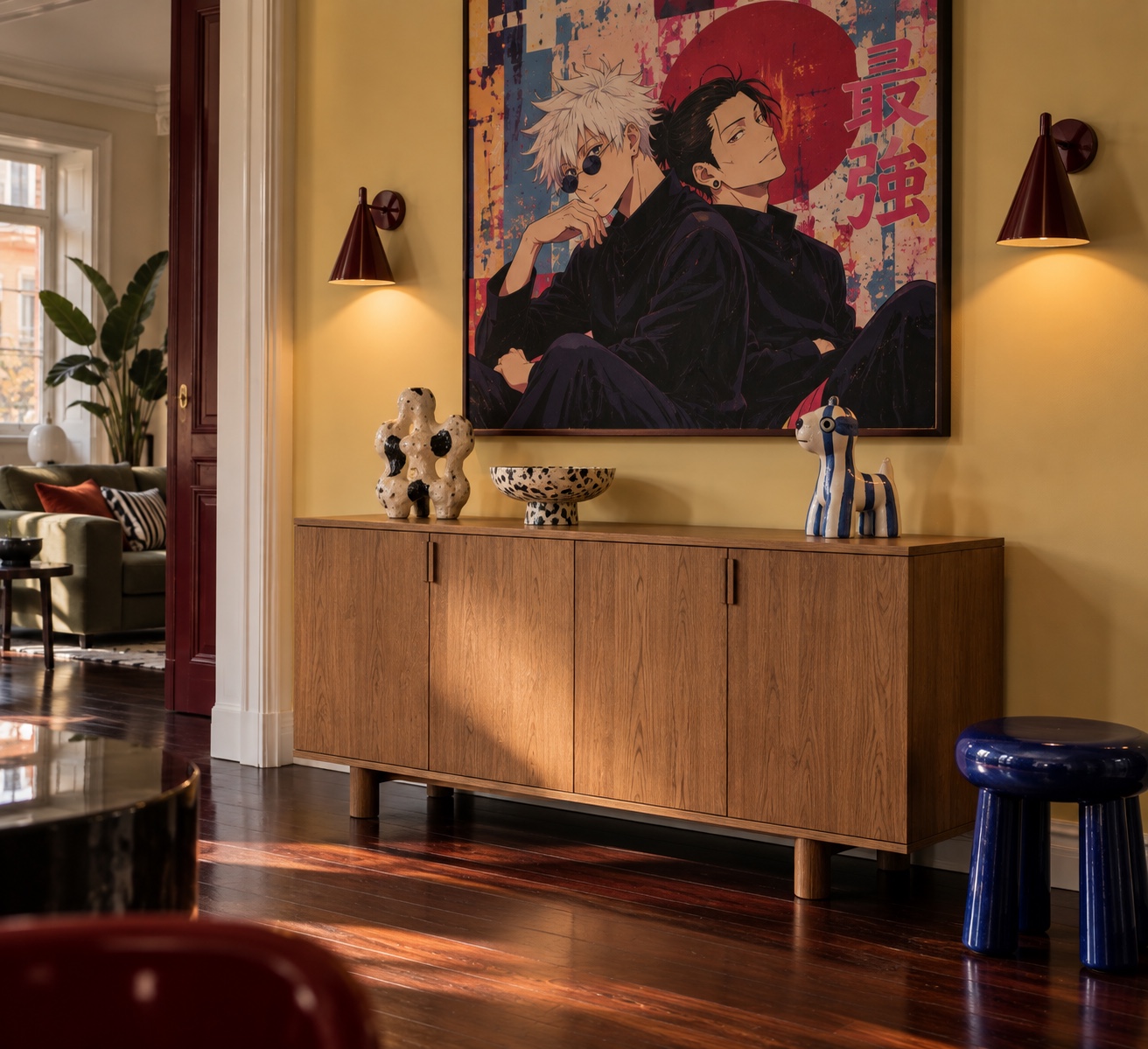
Let a basic chest of drawers sit underneath an antique mirror. Put a new sideboard below the anime artwork you actually love. Mix the upholstered bed with old textiles rather than buying the matching everything.
The trick is remarkably simple:
Stop styling IKEA exclusively with IKEA.
A room becomes interesting when things come from different places, different decades and different versions of you.
The furniture doesn’t always need more personality.
Sometimes the room around it does.
MY EDIT
01
Three oversized architectural handles. Sharp, graphic and deliberately colourful. Almost absurdly simple — and probably the quickest way here to make a familiar cabinet feel completely different.
02
Burl wood on something deliberately basic. The pattern does all the work, which is exactly why I like it.
03
Pale lilac with translucent burgundy underneath. Not necessary. Not subtle. Much better because of it.
THE TAKEAWAY
The best IKEA hack might be the one nobody notices.
Change the detail. Change the finish. Change the context. But don’t try to disguise the piece completely.
The point isn’t to make IKEA look expensive.
It’s to make something familiar feel like yours.